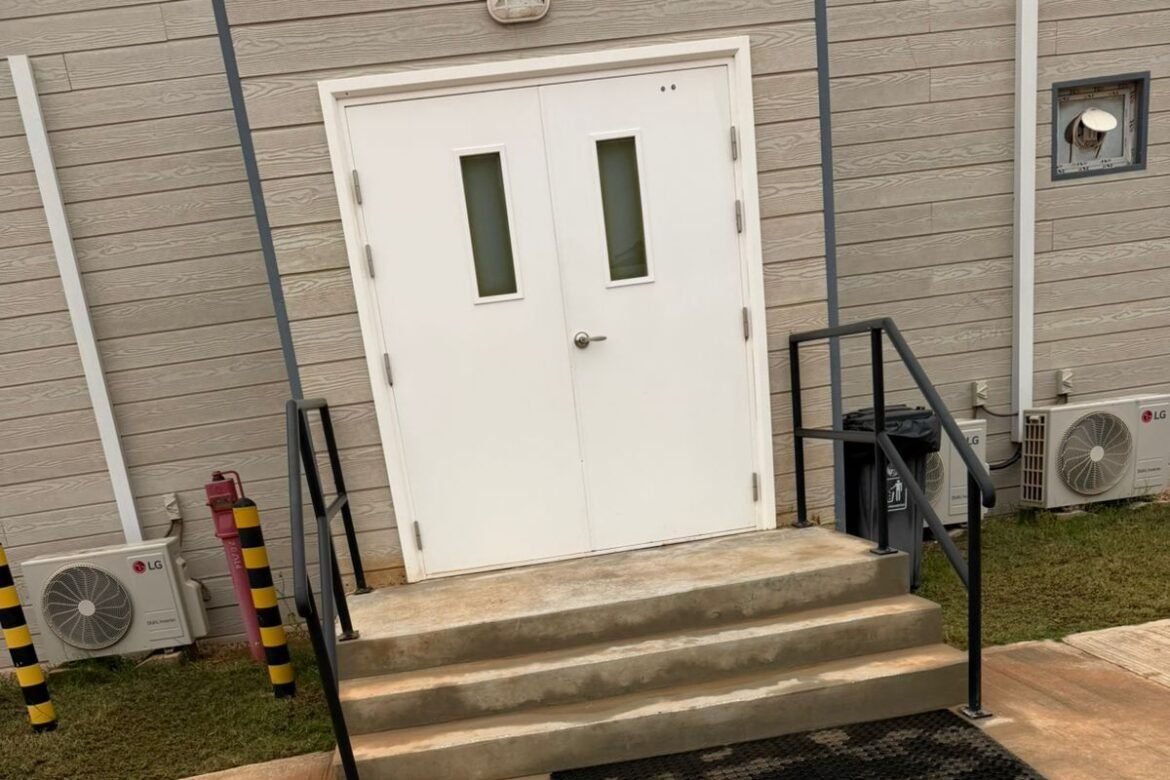
Government projects in the Kingdom follow a more formal path than most private developments. Tenders are published and submitted through official channels, evaluation follows regulated procedures, local content and Saudization carry real weight, and every deliverable is documented and approved by the owner's consultant. Planning TCF for government projects in Saudi Arabia means meeting all of these expectations for site offices, supervision facilities, welfare and worker accommodation, not only for the permanent works. This guide explains how temporary facilities fit into public projects, what Etimad means for contractors and subcontractors, and how to stay compliant from tender to demobilization with an experienced TCF contractor in Saudi Arabia.
How TCF fits into government projects
Government owners include ministries, municipalities, public universities, healthcare clusters, utilities and other public entities, often supported by a project management office and a supervision consultant. Temporary facilities usually appear in one of two ways:
- As part of the main contract: the general or main contractor provides TCF under the preliminaries or general requirements, often including specified offices, furniture, IT and sometimes vehicles for the supervision consultant.
- As a separate package: on larger programmes, the owner may tender temporary facilities, shared offices or camps separately.
In both cases the specification is set by the contract documents, and the consultant approves drawings, materials and installation. A main contractor that subcontracts the TCF remains responsible to the owner, so the TCF partner must work to the same standards and documentation discipline. Strong general contracting experience helps here, because the TCF has to follow the same procedures as the main works.
Etimad and government tendering basics
Etimad is the government's unified digital platform for procurement, managed by the Ministry of Finance. Government entities publish tenders on it, and bidders register, purchase tender documents, ask clarification questions and submit their offers through the platform. Public procurement is governed by the Government Tenders and Procurement Law and its implementing regulations, which set out how tenders are announced, evaluated and awarded.
For contractors, the practical points are consistent:
- Keep company registration and all official certificates valid and up to date on the relevant platforms, since expired documents can disqualify a bid.
- Read the tender conditions carefully, including the bid guarantee and performance guarantee requirements.
- Prepare the technical and financial offers exactly as requested, as they are usually evaluated in a defined sequence.
- Use the clarification period to resolve unclear TCF requirements before pricing.
- Price the complete TCF scope, including utilities, MEP, maintenance and demobilization, so no variation is needed later.
Our guide to TCF tenders and RFQs explains how to read and respond to a temporary facilities scope in more depth.
Local content and Saudization
Local content is a central policy in Saudi public procurement. The Local Content and Government Procurement Authority develops the related requirements, and depending on the tender, evaluation may include local content targets, preference mechanisms for local products and local small and medium enterprises, and lists of products that must be sourced locally where they apply. Bidders are expected to document how they meet these requirements.
TCF offers real opportunities to contribute. Locally manufactured cabins, panels, steel structures, furniture, HVAC equipment and electrical materials, together with local subcontractors and suppliers, all strengthen a bid's local content position. On the workforce side, the contractor's Nitaqat status under the Saudization programme and its record of employing Saudi nationals are typically checked during qualification and throughout the contract. A TCF partner that is itself Saudi-based, with a local supply chain, makes compliance simpler for the main contractor.
Documentation and compliance requirements
Government projects are document-heavy. The table below summarises what is commonly requested from contractors and TCF subcontractors; exact requirements vary by entity and tender.
| Requirement | What it typically involves | Practical tip |
|---|---|---|
| Commercial registration and chamber membership | Valid CR covering the relevant activities | Check activities match the TCF and MEP scope |
| Contractor classification | Classification in the relevant field, commonly required depending on project type and value | Confirm the required field and grade early |
| Zakat and tax certificates | Valid certificates from the tax authority | Track expiry dates throughout the tender period |
| Social insurance and Saudization | GOSI certificate and Nitaqat status | Keep status healthy; it may be rechecked before award |
| Local content documentation | Evidence of local products, suppliers and workforce | Collect supplier declarations from the start |
| Guarantees and insurance | Bid and performance guarantees, contract insurances | Arrange banking facilities before bidding |
| HSE plan | Project-specific safety, health and environmental plan | Include TCF fire safety, welfare and emergency arrangements |
| Method statements and ITPs | Work methods and inspection points for each activity | Prepare TCF-specific documents, not generic templates |
| Drawings and material submittals | Layouts, structural and MEP drawings, product data | Submit early; consultant reviews take time |
| As-built and handover records | As-built drawings, test certificates, manuals | Build the dossier during execution |
For the full list of qualification papers, see our article on TCF contractor prequalification. Quality documentation is covered in TCF method statements and ITPs.
Technical expectations on government TCF
Government consultants generally expect temporary facilities to be engineered and approved like permanent work. Typical expectations include drawings that comply with the Saudi Building Code, layouts reviewed for Civil Defense fire-safety requirements, specified office areas and finishes for the owner and consultant, meeting rooms, IT and communication systems, and welfare facilities that meet labour-accommodation expectations. Integrated fire fighting and fire alarm systems, reliable power, cooling, water and drainage, and a clear HSE framework for temporary facilities are all part of the inspection.
Early pre-construction planning helps convert the contract specification into a buildable, approvable TCF design before mobilization, and a single MEP contractor for all temporary services simplifies submittals, testing and inspections.
Execution, reporting and payments
During execution, government projects run on formal procedures: submittals and approvals, requests for information, inspection requests, progress reports and formal variation processes. TCF works are inspected like any other activity, and unapproved materials or undocumented changes can delay acceptance and payment. Payment certification follows the contract procedure, so cash flow planning matters, especially for a TCF package where much of the cost is incurred at the start of the project.
Demobilization and handover
Government contracts often define what happens to temporary facilities at the end: removal and site restoration, or in some cases handover of specified offices or equipment to the owner. Confirm these terms before pricing, keep utility as-builts up to date, and plan demobilization so that the site is restored to the standard the consultant will accept at final inspection.
Deliver compliant government TCF with BoldTarget
Government projects reward contractors who combine technical capability with disciplined documentation. BoldTarget is a Saudi general and MEP contractor based in Al Khobar, delivering temporary facilities with in-house power, HVAC, water, drainage, fire fighting and low current, and the submittals, method statements and records that public owners expect. See how we work on our temporary construction facility project, and contact BoldTarget to discuss TCF for your government tender or awarded project.
Frequently Asked Questions
What is Etimad and why does it matter for TCF contractors?
Etimad is the Saudi government's unified digital procurement platform, managed by the Ministry of Finance. Government entities publish tenders on it, and contractors register, purchase documents, ask clarifications and submit bids through it, so valid registration and certificates are essential.
How does local content affect TCF bids on government projects?
Depending on the tender, evaluation may include local content targets, preference mechanisms for local products and enterprises, and lists of products that must be sourced locally. Using locally manufactured buildings and materials and local suppliers strengthens a TCF bid.
Which documents do government clients usually request from a TCF contractor?
Commonly a valid commercial registration, contractor classification where required, Zakat and tax certificates, GOSI and Nitaqat status, local content evidence, guarantees and insurance, an HSE plan, method statements, ITPs and drawings. Exact requirements vary by entity and tender.
Who owns temporary facilities at the end of a government contract?
It depends on the contract. Many contracts require removal and site restoration, while some require specified offices or equipment to be handed over to the owner. These terms should be confirmed before pricing the TCF.
Related TCF Guides
- Mess Hall and Kitchen for Construction Camps: Saudi Design Guide
- Site Washrooms and Ablution Units: Planning Guide for Saudi Projects
- Construction Site Hoarding in Saudi Arabia: Fencing and Gates Guide
- HVAC for Temporary Site Facilities: Cooling in Saudi Conditions
- TCF contractor in Saudi Arabia: explore our Temporary Construction Facilities services