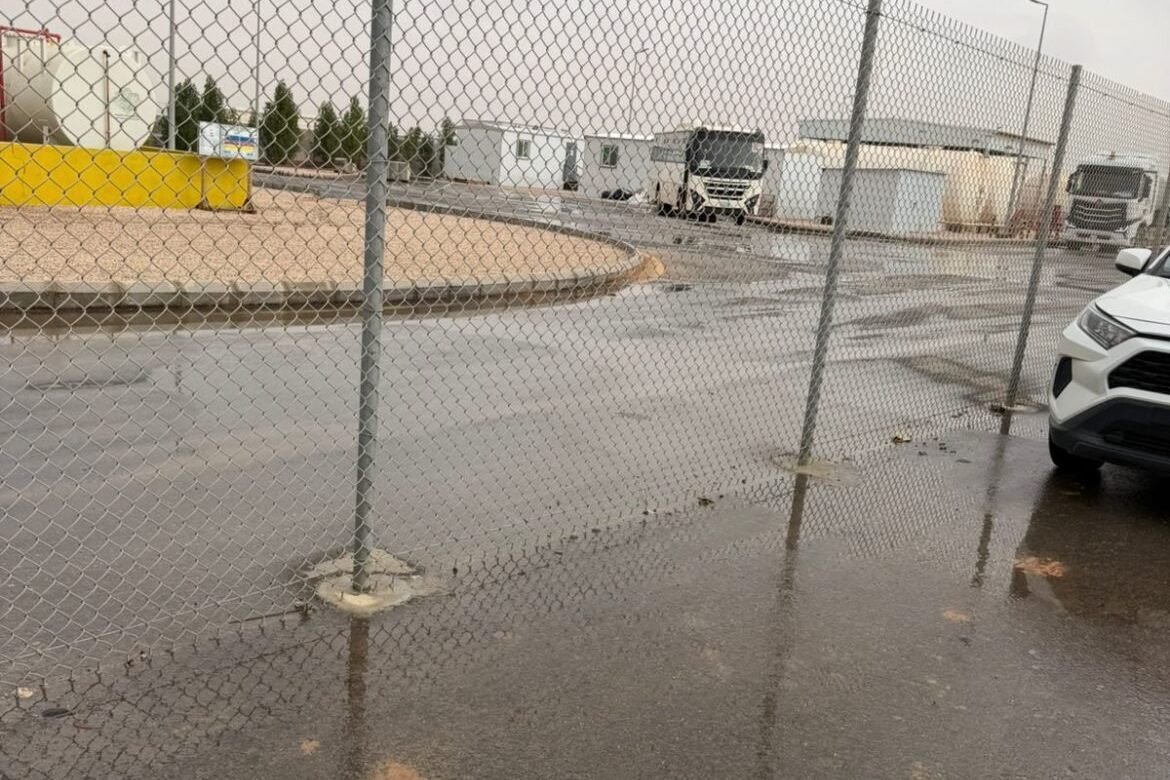
The boundary is the first thing anyone sees of a construction project, and the first line of its security and safety system. Choosing the right construction site hoarding in Saudi Arabia means balancing security, public safety, wind resistance, appearance, municipality expectations and budget, then matching the boundary with gates and gatehouses that control every person and vehicle entering the site. This guide compares solid hoarding, chain-link and mesh fencing, explains branded hoarding and gate design, and covers the practical points that keep a site boundary standing through shamal winds and sandstorms.
What Site Hoarding and Fencing Must Achieve
A site boundary has several jobs at the same time, and the right solution depends on which of them matters most at each stretch of the perimeter:
- Public safety: keep members of the public away from excavations, plant movements and falling objects, particularly on urban sites next to roads and pavements.
- Security: deter theft of materials, cables and equipment, and give guards and cameras a clear perimeter to monitor.
- Access control: funnel all people and vehicles through controlled gates.
- Screening: reduce dust, noise and visual impact on neighbours and passing traffic.
- Image: present the owner, the project and the contractor professionally.
Fencing is also one of the first activities on site, so it belongs in the early mobilization package delivered by your temporary construction facilities services provider, alongside site offices, temporary power and access roads. A site that is not secured on day one starts losing materials and control on day one.
Hoarding vs Chain-Link vs Mesh Fencing
There is no single best fence. Many projects combine types: solid hoarding along public frontages, welded mesh on internal boundaries and chain-link on long remote perimeters where appearance matters less than cost and speed.
| Boundary type | Typical use | Strengths | Watch-outs |
|---|---|---|---|
| Solid hoarding (profiled metal sheets on steel posts and rails) | Urban frontages, public roads, sites needing screening and branding | Full visual screen, reduces dust and noise spread, ideal surface for graphics | Acts like a sail in wind; needs engineered posts, bracing and foundations |
| Chain-link fencing on steel posts | Long perimeters on industrial and remote desert sites | Economical, quick to install, low wind load | Easier to climb or cut; offers no screening; sand can build up against it |
| Welded mesh panels (including anti-climb types) | Secure compounds, laydown yards, substations, internal boundaries | Stronger and harder to climb than chain-link, good visibility for CCTV | Higher cost than chain-link; panel joints must be secured |
| Movable mesh panels on weighted bases | Changing work zones, excavations, temporary segregation inside the site | Fast to relocate as the work moves | Can be blown over without extra ballast or bracing; not a security fence |
| Precast concrete barriers or block walls | Vehicle-impact protection, high-security areas, long-duration sites | Robust, resists vehicle impact | Heavy to install and remove; needs lifting equipment and planning for demobilization |
Branded Hoarding: Turning the Boundary into a Billboard
On city projects, developers and government entities often use hoarding to communicate: project name, renderings, completion messages, Vision 2030 themes and safety messages. Done well, branded hoarding builds public goodwill and turns months of construction into a marketing asset. A few practical points:
- Use UV-resistant printed panels or wraps; the Saudi sun fades poor-quality graphics quickly.
- Agree artwork, logos and approval routes with the owner early, because printing and installation take time.
- Check municipality expectations on advertising content, height and appearance before ordering, especially on main roads.
- Keep sight lines clear at gates and junctions so graphics never block a driver's view.
- Plan for cleaning and replacing damaged panels so the boundary keeps looking professional.
Designing Hoarding for Wind, Sand and Heat
Solid hoarding is a structure, not just a fence. A long run of sheet panels catches wind like a sail, and strong shamal winds and sudden storms regularly flatten boundaries that were installed without engineering. Good design considers post size and spacing, embedment depth or concrete footings, diagonal bracing or kickers, and the connection between sheets and rails. Sand building up against the hoarding adds load and can create a ramp that lets people climb over, so drifting sand needs to be cleared as part of routine maintenance.
Near the coast, corrosion protection of posts, rails and fixings matters, while inland the main concerns are heat and dust. Our general contracting engineers treat hoarding and gate structures like any other temporary structure, with calculations, foundations and inspection after severe weather.
Gates, Gatehouses and Access Control
Gates are where the boundary does its real work. A good entrance design separates people from vehicles, keeps queues off the public road and gives security staff a clear view of everything coming in and out.
Vehicle gates
Sliding gates suit wide openings and windy sites better than large swing leaves. Widths and turning space must suit the largest expected vehicles, including low-bed trailers and mobile cranes. Separate entry and exit lanes, a barrier arm and a vehicle inspection area reduce delays and improve control.
Pedestrian entry
Turnstiles or controlled pedestrian gates, linked to card or biometric readers, record who is on site, which matters for headcounts during emergencies. Shade and drinking water at the entrance help during shift changes in summer.
Gatehouses and guard rooms
The gatehouse is usually an insulated cabin with air conditioning, a washroom, good window visibility and space for visitor registration. Our HVAC and electrical teams make sure it stays cool and powered, with lighting for the gate and the approach road.
Security systems
CCTV, access control, intercoms and perimeter lighting turn a fence into a security system. BoldTarget installs these through our low current systems service; read more in our guide to security, CCTV and access control for construction sites.
A practical gate design checklist:
- Gate widths and turning radii checked against the largest delivery and crane vehicles.
- Separate pedestrian entry away from vehicle movements.
- A dedicated emergency gate or route for ambulances and Civil Defense vehicles.
- Truck holding space so vehicles do not queue on the public road.
- Lighting, CCTV coverage and signage at every entrance.
- Power and data cabling to the gatehouse planned before roads are surfaced.
Municipality and Owner Requirements
Requirements vary by city and by owner, so confirm them before ordering materials. In urban areas the municipality (Baladiya) may need to approve hoarding on public frontages, any temporary use of pavements and the appearance of the boundary, and traffic arrangements at gates may need coordination. Industrial owners in the Eastern Province and large developers often specify their own fence types, heights, signage and gate procedures in their HSE and security standards. Civil Defense expects emergency access to remain available at all times. Our guide to TCF permits and approvals in Saudi Arabia explains how these approvals usually fit together, and dense city sites are covered in our article on temporary construction facilities in Riyadh.
Installation, Maintenance and Removal
Start with an accurate boundary survey so the fence sits on the correct line, then scan for buried services before drilling or excavating for posts. On large sites, install in phases that follow the mobilization sequence, securing the office compound and laydown areas first. Gate positions should be fixed together with the internal road network described in our guide to temporary site roads and parking.
During the project, inspect the boundary routinely and after every storm: loose sheets, leaning posts, damaged mesh, sand drifts and broken gate hardware. As work phases change, sections may need to move. At demobilization, posts, panels and gates can often be reused on the next project if they were chosen and installed with removal in mind, which is better for both budget and sustainability.
Secure Your Site Boundary with BoldTarget
BoldTarget delivers hoarding, fencing, gates, gatehouses and security systems as part of complete temporary facilities, coordinated with roads, power and site offices by one accountable contractor. Explore our temporary construction facility project in Saudi Arabia, then contact BoldTarget to plan a boundary that is safe, secure and ready for Saudi weather.
Frequently Asked Questions
What is the difference between site hoarding and site fencing?
Hoarding is a solid, continuous barrier, usually metal sheets on a steel frame, that screens the site and can carry graphics. Fencing such as chain-link or welded mesh is see-through, lighter and cheaper per metre. Many Saudi projects use hoarding on public frontages and fencing on internal or remote boundaries.
Do I need municipality approval for construction hoarding in Saudi Arabia?
Often yes, particularly on urban sites where hoarding faces a public road or uses part of the pavement, and where branded graphics are displayed. Requirements differ between cities and owners, so confirm them with the municipality and the project owner before ordering materials.
How do you stop site hoarding from blowing down in strong wind?
Treat hoarding as an engineered temporary structure, with designed post sizes, spacing, footings and bracing. Inspect it routinely and after storms, and clear sand drifts that add load. Movable mesh panels need extra ballast or bracing on exposed sites.
What should a construction site gatehouse include?
A typical gatehouse is an insulated, air-conditioned cabin with good visibility of the gate, a washroom, power, data and lighting. It usually supports visitor registration, CCTV monitoring and access control, and sits next to separate vehicle and pedestrian entries.
Related TCF Guides
- Construction Site Workshops and Fabrication Yards: Planning Guide
- Site Office IT Network and Internet: A Guide for Saudi Projects
- TCF Design and Engineering: Drawings and Deliverables Explained
- Temporary Facilities in Jubail and Dammam for Industrial Projects
- TCF contractor in Saudi Arabia: explore our Temporary Construction Facilities services