A temporary facilities tender often looks simple on paper: a list of cabins, a site plan and a request for price. The bids that come back tell a different story. One includes generators, another excludes sewage, a third prices rental but not installation, and a fourth assumes the client will supply foundations. A well-prepared TCF tender and RFQ prevents this by defining exactly what is required and asking every bidder to price it in the same format. This guide explains what a clear RFQ must contain, how to run the tender, and how to evaluate bids fairly so the lowest number is also the most complete offer.
Why TCF Bids Are So Hard to Compare
Temporary construction facilities combine several trades: design, civil works, buildings, power, HVAC, water, drainage, fire safety, IT, operation and demobilization. When an RFQ only lists buildings, each bidder fills the gaps with its own assumptions. Cabin suppliers price units, full-scope contractors price complete systems, and the procurement team is left comparing offers that are not describing the same thing. The result is usually an award to the lowest visible price, followed by variations for everything that was missing.
What a Clear TCF RFQ Must Contain
Scope and facility schedule
List every facility with quantities, capacities and users: offices by department, meeting rooms, owner and consultant offices, labour and staff accommodation, mess halls and kitchens, washrooms, ablution units, prayer areas, clinic, stores, workshops, security buildings, parking and laydown. State the occupancy for each area rather than only the number of units, because occupancy drives HVAC, power, water and sewage design. Our guide to the TCF contractor scope of work gives a package list you can paste directly into the RFQ.
Specifications and performance requirements
Specify what matters for performance and leave room for bidders to propose their building systems. Typical items are wall and roof insulation, internal finishes, fire rating of materials, indoor temperature targets for summer conditions, lighting levels, furniture schedules, sanitary fixtures and any owner standards that apply. Performance specifications let a contractor propose modular units, light steel framing or pre-engineered buildings while still meeting the same outcome.
Drawings and site information
Provide the site boundary, a concept master plan if available, topographic survey data, a soil report, existing services, access routes and any restrictions such as exclusion zones or height limits. If no survey exists, say so and ask bidders to include it.
Utilities and points of connection
For each utility, state whether a permanent connection will be available, where the point of connection is, when it is expected, and who supplies generators, fuel, water and sewage disposal until then. This single section removes many of the largest pricing differences between bids.
Duration, extensions and demobilization
State the expected period of use, the possibility of extension, and what happens at the end: removal, reinstatement, buy-back or relocation. The contract model, whether purchase, rental or lease-to-own, should be clear or requested as alternatives. Our article on TCF contract models explains the trade-offs.
Operation and maintenance
If the contractor will operate and maintain the facilities, define the services, staffing, response times and reporting, and ask for a monthly price separate from the capital works.
Pricing schedule
Issue a priced bill or schedule with separate lines for design, civil works, each building type, power, HVAC, water and drainage, fire safety, low current, testing and commissioning, monthly rental or O&M, demobilization and optional items. Bidders who must fill in every line cannot hide exclusions.
TCF RFQ Checklist
| RFQ item | What to include | Why it matters |
|---|---|---|
| Facility schedule | Quantities, users and occupancy per area | Drives sizing of buildings and every utility |
| Specifications | Performance requirements and owner standards | Allows comparable but flexible solutions |
| Site data | Boundary, survey, soil report, access, restrictions | Avoids foundation and access surprises |
| Concept master plan | Zoning, separation distances, expansion space | Sets the basis for approvals |
| Utilities | Points of connection, timing, interim supply | Removes the largest pricing differences |
| Approvals | Who prepares, submits and pays | Prevents schedule gaps |
| Programme | Required handover dates and phasing | Aligns TCF with mobilization |
| Duration and end of use | Period, extensions, removal, buy-back | Affects the choice of building system |
| O&M | Services, response times, reporting | Makes running costs visible |
| HSE and quality | Required plans, method statements, ITPs | Ensures audit-ready documentation |
| Pricing schedule | Line-by-line, with optional items | Exposes exclusions |
| Qualification documents | Company, financial, HSE and reference evidence | Screens capability before price |
For the qualification part, see our list of TCF contractor prequalification documents.
Running the Tender: Site Visits and Clarifications
Hold a site visit so bidders can see access conditions, soil and existing services. Issue all clarification answers to every bidder in writing, and keep the bid period realistic: a full-scope TCF bid needs time for layout, MEP sizing and supplier quotations. Ask bidders to submit a technical proposal with a master plan, building system description, MEP concept, programme, HSE approach and a list of deviations, separate from the commercial offer.
For government projects tendered through Etimad, follow the platform procedures for clarifications and submissions, and make sure the RFQ reflects any local content and Saudization requirements that apply. On private industrial projects, align the RFQ with the owner's camp and office standards from the start, so bidders design to the standard that will actually be inspected rather than to a generic cabin specification.
How to Evaluate TCF Bids Fairly
Step 1: Technical compliance
Check each technical proposal against the RFQ before looking at prices. Does the layout meet the occupancy and separation requirements? Is the power supply sized for the whole facility in summer? Is sewage disposal solved? Are fire safety and approvals covered? Record every deviation and exclusion.
Step 2: Normalise the prices
Add the estimated cost of any missing scope to the bids that excluded it, so all offers describe the same facility. Compare rental and purchase offers over the same total period, including extensions and demobilization. Include operating costs that differ between solutions, such as generator fuel for poorly insulated buildings, so that cost factors such as those explained in our guide to TCF cost factors in Saudi Arabia are visible.
Step 3: Weighted scoring
Agree the evaluation criteria and their weights before bids are opened. Typical criteria are technical solution, programme and mobilization capacity, HSE and quality systems, relevant experience, MEP capability, O&M proposal and normalised price. Scoring after the prices are known invites bias and challenges from unsuccessful bidders, especially in government tenders where transparency is expected.
Red Flags in TCF Bids
- Prices with a long list of exclusions or items marked by others.
- No load schedule or generator sizing for the facility.
- No solution for sewage, or a vague reference to tankers without capacity.
- A programme that ignores approval periods and long-lead equipment.
- Fire safety limited to extinguishers.
- No demobilization price, or an unclear position on ownership at the end.
Get a Complete, Comparable TCF Proposal
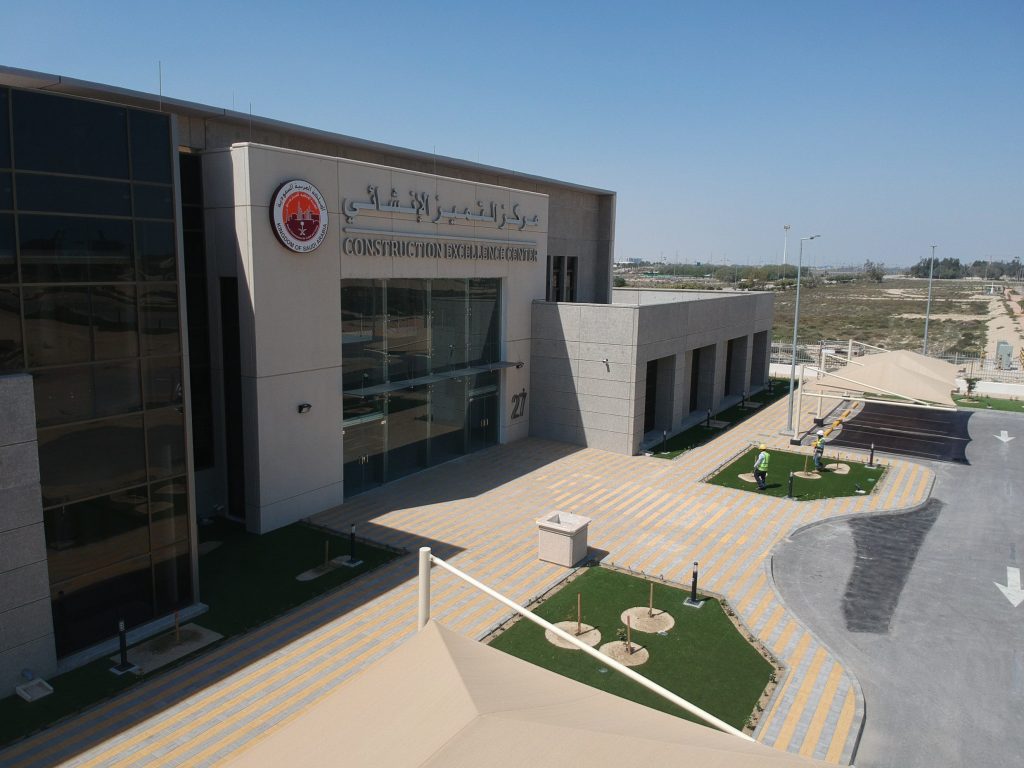
As a TCF contractor in Saudi Arabia, BoldTarget prices the full scope line by line, supported by pre-construction services, general contracting and in-house MEP engineering. We can also help clients review an RFQ before issue. Look at our completed temporary construction facility project, then contact BoldTarget to send your tender documents or request a proposal.
Frequently Asked Questions
What should a TCF RFQ include?
A clear TCF RFQ includes a facility schedule with occupancy, performance specifications, site data, a concept master plan, utility points of connection, approval responsibilities, the required programme, duration and end-of-use terms, O&M requirements and a line-by-line pricing schedule. It should also request qualification documents and a technical proposal separate from the price.
How do you compare rental and purchase bids for temporary facilities?
Compare them over the same total period, including likely extensions, installation, maintenance and demobilization. Add any scope one bidder excluded, and include operating differences such as fuel consumption. Only then is the comparison fair.
Why do TCF bids vary so much in price?
Usually because the RFQ left scope open and bidders made different assumptions about foundations, power, sewage, fire safety, approvals and demobilization. Some bidders price only buildings while others price a complete working facility. A detailed pricing schedule and defined points of connection reduce the variation.
Should technical and commercial TCF offers be evaluated separately?
Yes. Evaluating technical compliance first, before seeing the prices, keeps the assessment objective and exposes missing scope. The criteria and weights should be agreed before bids are opened, which is especially important for transparent government tenders.
Related TCF Guides
- TCF Contract Models: Lump Sum, Rental, Lease-to-Own or Buy-Back
- TCF Construction Timeline: Every Phase from Survey to Handover
- TCF Mistakes to Avoid: 14 Costly Errors on Saudi Construction Sites
- Relocating and Reusing TCF Buildings: Reuse and Buy-Back Guide
- TCF contractor in Saudi Arabia: explore our Temporary Construction Facilities services