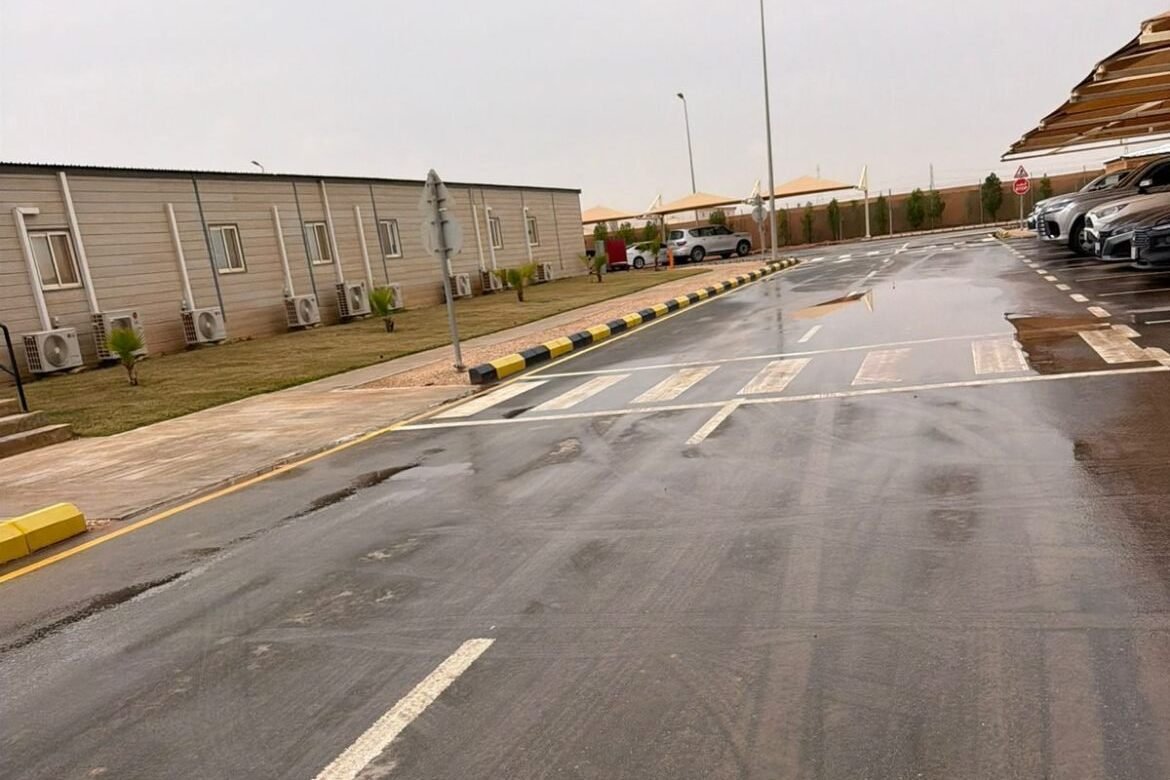
Temporary construction facilities involve dozens of decisions made under time pressure, and a single missed item, such as an undersized generator, an unapproved layout or a forgotten grease trap, can affect the whole project. This TCF checklist brings the critical items together in one place, grouped by phase from early planning to demobilization. It is written for project managers, construction managers and procurement engineers in Saudi Arabia who need to confirm that nothing has been overlooked. Use it at kick-off, at each design review and before occupation, and adapt it to your own owner and project requirements.
1. Planning and requirements
Most TCF problems start with unclear requirements. Fix these inputs before asking anyone for a price.
| Check item | What to confirm |
|---|---|
| Headcount and phasing | Peak and average numbers for staff, labour and visitors, with the build-up profile |
| Duration | Expected service life and possible extensions |
| Owner standards | Owner specifications for camps, offices, welfare and HSE |
| Site data | Survey, soil information, access, flood risk and neighbouring hazards |
| Utilities | Availability of grid power, water and sewer, or interim solutions |
| Budget and ownership | Buy, rent or lease decision and end-of-project ownership |
2. Procurement and contract
A clear tender package attracts comparable bids. Our guide to writing a TCF tender and RFQ covers this phase in depth.
| Check item | What to confirm |
|---|---|
| Scope matrix | Who provides design, buildings, civil works, MEP, utilities, furniture, O&M and demobilization |
| Specifications | Insulation, finishes, HVAC, fire safety and furniture standards stated clearly |
| Contractor capability | In-house design and MEP, HSE record, relevant references and resources |
| Programme | Required handover dates by phase, aligned with mobilization |
| Commercial terms | Payment basis, rental terms, buy-back and variation pricing |
| Interfaces | Links with the main contractor, catering, security and transport providers |
3. Design and approvals
| Check item | What to confirm |
|---|---|
| Design basis | Approved by owner and consultant before detailed design |
| Master plan | Zoning, fire separation, emergency access, wind direction and expansion space |
| Structural design | Wind loads, foundations, anchoring and stacking calculated |
| Electrical load schedule | All buildings, kitchens, workshops and future loads included |
| HVAC sizing | Based on real summer conditions and room use |
| Drainage and sewage | Realistic solution for the site: network, septic or treatment plant |
| Approvals plan | Owner, consultant, municipality or zone authority, Civil Defense and utilities identified |
Our pre-construction services help prepare the design basis and submissions, and our article on TCF permits and approvals in Saudi Arabia explains the approval sequence.
4. Site preparation and civil works
| Check item | What to confirm |
|---|---|
| Earthworks and levels | Site graded with falls away from buildings |
| Foundations | Built to approved drawings, levels checked before delivery |
| Roads and parking | Access roads, bus bays, parking and dust control in place |
| Stormwater | Drainage channels and soakaways or outfalls functioning |
| Fencing and gates | Perimeter fencing, gatehouses and controlled entrances |
5. Buildings and installation
| Check item | What to confirm |
|---|---|
| Factory inspection | Units inspected before dispatch against approved drawings |
| Delivery and lifting | Lifting plans, certified equipment and safe offloading |
| Weather-tightness | Roof joints, sealants, doors and windows sealed against dust and rain |
| Insulation | Wall and roof insulation to specification, no gaps |
| Finishes and furniture | Flooring, ceilings, beds, lockers and office furniture complete |
6. MEP and utilities
MEP is where most failures happen after occupation. With in-house MEP contracting, BoldTarget designs, installs and tests these systems under one team.
| Check item | What to confirm |
|---|---|
| Power supply | Generators or utility connection sized to the load schedule, with backup |
| Electrical distribution | Boards labelled, earthing tested, RCD protection provided |
| HVAC | All units commissioned, condensate drained, kitchen exhaust working |
| Water | Storage tanks cleaned and disinfected, pumps and heaters tested |
| Drainage and sewage | Pipes pressure or flow tested, grease traps installed, septic or STP commissioned |
| Low current | CCTV, access control, Wi-Fi and data networks working |
For security and communications systems, see our low-current systems services.
7. Fire safety, HSE and security
| Check item | What to confirm |
|---|---|
| Fire alarm and detection | Tested and covering all buildings, including kitchens and stores |
| Fire fighting equipment | Extinguishers, hose reels or hydrants positioned and tagged |
| Means of escape | Exits clear, emergency lighting and signage working |
| Fuel and LPG storage | Located and protected according to the approved design |
| Emergency plan | Assembly points, evacuation routes and drill schedule |
| Welfare and HSE | First aid, heat-stress measures, signage and site rules |
Our fire fighting systems team and our HSE approach support this stage.
8. Testing, handover and occupation
| Check item | What to confirm |
|---|---|
| Testing and commissioning | Results recorded for every system |
| Inspections | Owner, consultant and Civil Defense inspections completed |
| Snag list | Joint snag list issued and closed |
| Handover documents | As-built drawings, O&M manuals, warranties and test certificates |
| Training | Client and camp staff trained on systems and emergency procedures |
9. Operation and maintenance
| Check item | What to confirm |
|---|---|
| O&M scope | Hard and soft services clearly allocated |
| PPM plan | Schedule for HVAC, generators, water, sewage and fire systems |
| Help desk | Fault reporting, ticketing and response priorities |
| KPIs and SLA | Agreed targets and monthly reporting |
| Waste and hygiene | Segregation, licensed haulers, cleaning and pest control |
Our guide to camp O&M and facility management explains how to set up this phase.
10. Demobilization
| Check item | What to confirm |
|---|---|
| Exit plan | Sequence agreed so facilities close as the workforce reduces |
| Utility disconnection | Safe isolation and closure of utility accounts |
| Reuse or disposal | Units for buy-back, transfer, resale or disposal identified |
| Waste removal | Tanks emptied and waste removed by licensed providers |
| Site restoration | Foundations removed, site cleaned and handed back |
For a deeper look at this final phase, read our guide to TCF mobilization and demobilization planning.
The items most often missed
Across temporary facilities, the same few items are overlooked again and again. Give them extra attention at every review:
- Electrical capacity for summer peak cooling and future expansion.
- Space in the master plan for additional blocks if headcount grows.
- Grease traps, kitchen exhaust and fire protection in catering areas.
- Shaded walkways, rest areas and drinking water points for heat-stress protection.
- Ablution and prayer facilities sized for the actual workforce.
- Stormwater drainage, which seems unnecessary until one heavy rain floods the camp.
- Interim power, water and sewage arrangements while utility connections are pending.
- As-built drawings and asset registers, essential for O&M and relocation.
- Clear responsibility for each item between the client, the main contractor and the TCF contractor.
How to use this checklist
- Assign an owner and a target date to every line.
- Review it at kick-off, design approval, pre-occupation and pre-demobilization.
- Add owner-specific requirements as extra rows.
- Keep evidence, such as approvals, test reports and photos, linked to each item.
Turn this TCF checklist into a delivered project
As a TCF contractor in Saudi Arabia with in-house MEP and general contracting, BoldTarget can take responsibility for every line of this checklist, from design and approvals to O&M and demobilization. See how we approached our temporary construction facility project in Saudi Arabia, then contact BoldTarget to plan your site offices, labour accommodation or complete TCF.
Frequently Asked Questions
What should a TCF checklist include?
A complete TCF checklist covers planning inputs, procurement and contract, design and approvals, site preparation, buildings, MEP and utilities, fire safety and HSE, testing and handover, operation and maintenance, and demobilization. Grouping items by phase makes it easier to review at each project milestone.
When should project managers use a TCF checklist?
Use it at project kick-off to define requirements, at each design review, before occupation and before demobilization. Reviewing it at these milestones helps catch gaps such as missing approvals, undersized power or unclear scope before they become costly.
Who is responsible for completing the TCF checklist?
The client's project manager normally owns the checklist, but many items are delivered by the TCF contractor, the consultant and other providers. Assigning a responsible party and target date to each line makes accountability clear.
Can one contractor cover the whole TCF checklist?
Yes, a TCF contractor with in-house design, MEP and general contracting capability can deliver most items, from design and approvals to installation, O&M and demobilization. This reduces interfaces compared with using separate suppliers for buildings, utilities and services.
Related TCF Guides
- Temporary Construction Facility Services Saudi Arabia: Full Guide
- How to Choose a TCF Contractor in Saudi Arabia: Criteria & Red Flags
- Temporary Power for Construction Sites in Saudi Arabia: A Guide
- TCF Subcontractor for EPC Contractors: How to Outsource It Right
- TCF contractor in Saudi Arabia: explore our Temporary Construction Facilities services