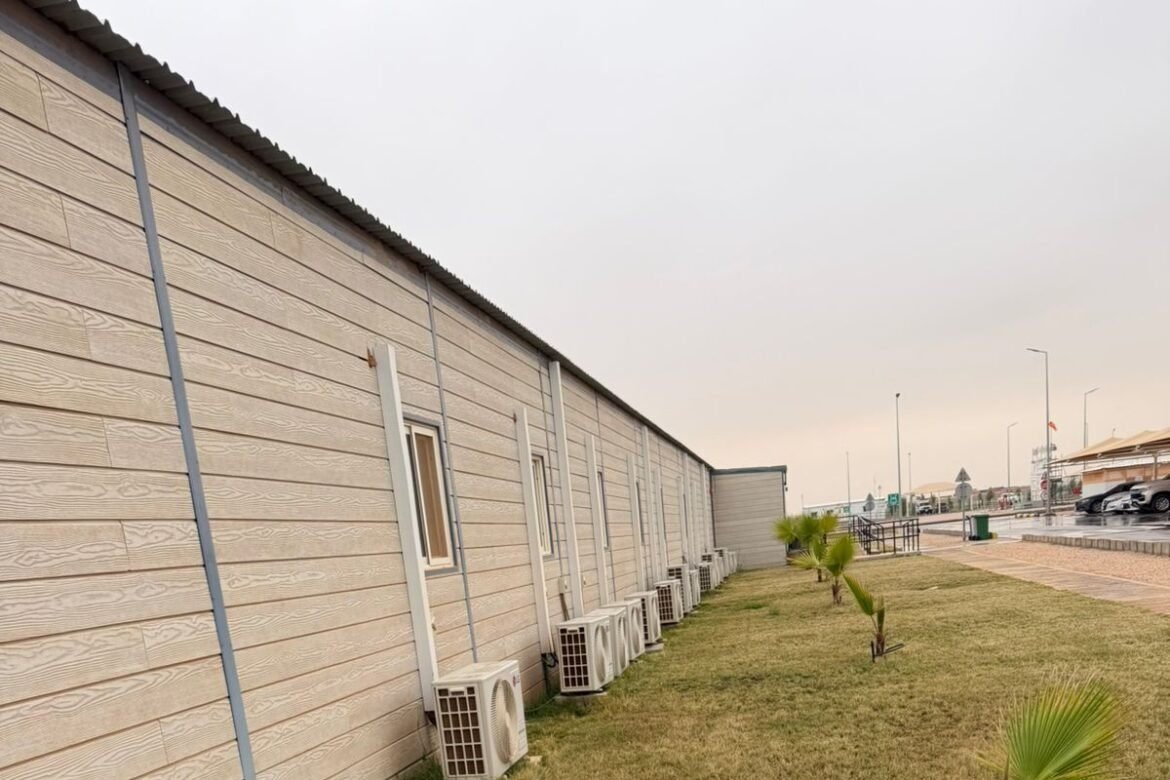
Handing over a construction camp is only the start of its working life. For the months or years that follow, hundreds of workers depend on air conditioning that runs through the summer peak, power that does not trip at night, water that is safe and hot, and toilets and kitchens that stay clean. Camp O&M and facility management is the discipline that keeps all of this working. This guide explains what a camp operation and maintenance scope should include, how to structure planned and reactive maintenance, which KPIs to track and how to write an SLA that protects both the client and the workforce.
Why camp O&M deserves its own plan
Many projects put great effort into building the camp and very little into running it. The result is familiar: split units clogged with dust by mid-summer, generators running without a service log, blocked drainage lines and pest problems that start in the kitchen and spread to the accommodation blocks. In the Eastern Province and other hot, dusty regions, these failures are not minor inconveniences. Loss of cooling in a fully occupied accommodation block is a heat-stress risk, and a failed sewage system is a health and compliance issue.
A clear O&M plan turns the camp from a cost that is reacted to into an asset that is managed. It also protects asset value for relocation or buy-back at the end of the project.
What a camp O&M scope should cover
A complete scope separates hard services, which keep the building systems running, from soft services, which keep the camp clean, safe and livable. Both should be defined before the camp is occupied, ideally as part of the original temporary construction facilities services contract, so that the team that built the systems is also the team that understands how to maintain them.
Hard services
- HVAC: split and package units, ventilation and kitchen exhaust, filter cleaning, coil washing, refrigerant checks and thermostat settings.
- Electrical and power: generators, distribution boards, earthing, internal and external lighting, and any solar or hybrid systems.
- Water and plumbing: storage tanks, pumps, water heaters, potable water quality checks, fixtures and leak repairs.
- Drainage and sewage: manholes, septic tanks or package treatment plants, grease traps and sewage removal.
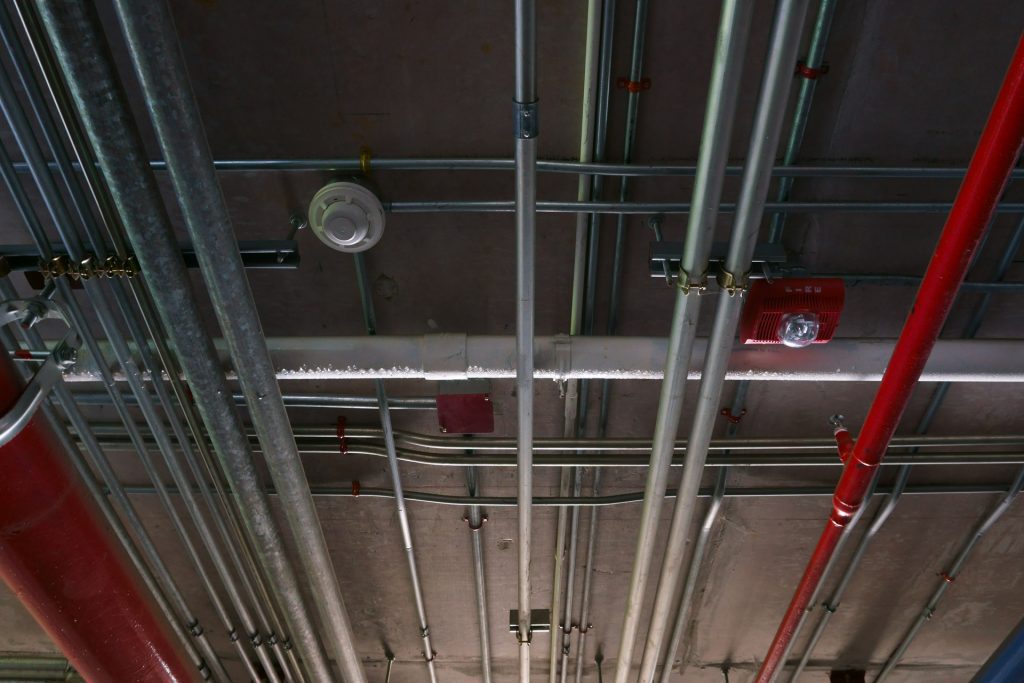
- Fire and life safety: fire alarm panels, detectors, extinguishers, hose reels, emergency lighting and exit signage.
- Low current: CCTV, access control, Wi-Fi and public address systems.
- Building fabric: doors, windows, roof sheets, sealants, flooring, furniture and minor civil repairs.
Soft services
- Cleaning of rooms, corridors, toilets, ablution areas and common spaces.
- Pest and rodent control by a licensed provider.
- Waste collection, segregation and removal.
- Laundry, linen and housekeeping where included.
Planned preventive maintenance for HVAC, power and water
Planned preventive maintenance (PPM) is the core of any camp O&M contract. Frequencies should follow the manufacturers' O&M manuals, adjusted for dust exposure, occupancy and season. On desert and coastal sites, filters and condenser coils usually need attention more often than the manual assumes, and the plan should say so clearly. The matrix below shows how a PPM schedule is typically organized.
| System | Typical PPM tasks | What drives the frequency | Records to keep |
|---|---|---|---|
| Split and package AC units | Filter cleaning, coil washing, drain line flushing, refrigerant and current checks | Dust levels, summer load, occupancy | Unit register and service checklist per unit |
| Generators and fuel | Oil and filter service, load tests, battery and coolant checks, fuel quality | Running hours, load profile, manufacturer manual | Running-hour log, service and refuelling log |
| Distribution boards and earthing | Thermal scans, tightening of terminations, RCD tests, earthing tests | Load growth, heat, inspection requirements | Test certificates and defect list |
| Water tanks and pumps | Tank cleaning and disinfection, pump checks, water sampling | Water source, temperature, health requirements | Cleaning certificates and lab results |
| Sewage, STP and grease traps | Desludging, grease trap cleaning, odour checks, pump maintenance | Occupancy, kitchen volume, system type | Disposal manifests and STP log |
| Fire alarm and fire fighting | Panel and detector tests, extinguisher inspections, emergency lighting tests | Civil Defense and owner requirements | Inspection tags, test reports, drill records |
Because these systems were installed by MEP teams, it pays to back the O&M team with the same disciplines. BoldTarget's in-house HVAC contracting team, electrical works team and plumbing and drainage specialists can support resident technicians when a fault goes beyond routine maintenance.
Reactive maintenance and emergency response
Even with a strong PPM plan, equipment fails. A good O&M contract defines how faults are reported, how they are prioritized and how fast they are attended. Residents and camp bosses need a simple way to raise a complaint, and every request should receive a ticket number so it can be tracked to closure.
Priorities are normally set in three levels: emergencies that affect life safety or a whole block (loss of power, fire alarm faults, major leaks, sewage overflow, loss of cooling in peak heat), urgent faults that affect a room or a single service, and routine requests. Fire and life-safety issues must also follow the camp emergency plan and the principles of our HSE management approach.
Cleaning, pest control and hygiene
Hygiene is where residents judge the camp every day. Cleaning schedules should treat rooms, toilets, ablution areas, kitchens and dining halls separately, because each carries different risks. Kitchens and food stores need special attention: grease, food waste and standing water attract pests quickly in hot weather. Pest control must use a licensed provider that keeps treatment records. Waste handling is closely linked to hygiene; our guide to construction camp waste management covers segregation, skips and licensed haulers in more detail.
Interfaces with catering and other service providers
Many camps have a separate catering contractor, a separate security company and sometimes a separate transport provider. Problems appear at the boundaries: who cleans the kitchen exhaust hood, who empties the grease trap, who maintains the cold room compressor. These interfaces should be written into a responsibility matrix before occupation. Our article on mess hall and kitchen design for construction camps explains the kitchen systems that most often fall between contracts.
KPIs and SLA: measuring camp O&M performance
An SLA without measurable KPIs quickly becomes an argument. The table below lists KPIs commonly used for camp O&M. Targets should be agreed between the client and the contractor based on camp size, remoteness and criticality, rather than copied from another project.
| KPI | What it measures | How to set the target |
|---|---|---|
| Response time by priority | Time from ticket to technician on site | Separate targets for emergency, urgent and routine tickets |
| Rectification time | Time from ticket to fault closed | Linked to spare parts held on site and supplier access |
| PPM compliance | Planned tasks completed versus scheduled | Reported monthly against the approved PPM plan |
| System availability | Uptime of power, cooling and water | Defined per system, considering backup provisions |
| Hygiene audit score | Cleanliness of rooms, toilets and kitchens | Based on an agreed audit checklist and inspection routine |
| Resident complaints | Number and type of complaints, repeat faults | Trend-based: complaints should fall over time |
| HSE performance | Incidents, near misses, drill completion | Aligned with the project HSE plan |
Staffing, CMMS, spare parts and reporting
The resident O&M team usually includes a facility supervisor, multi-skilled technicians covering HVAC, electrical and plumbing, a generator operator where the camp runs on diesel power, plus cleaners and helpers. A computerized maintenance management system (CMMS), or at least a structured register, should hold the asset list, PPM calendar and ticket history.
Practices that separate good camp operators from average ones:
- Keep a critical spares stock on site: AC capacitors and fan motors, breakers, pump seals, filters and common fixtures.
- Issue a monthly report covering KPIs, open tickets, PPM status and recommendations.
- Hold regular meetings with the client's camp manager and resident representatives.
- Track energy and water consumption to spot leaks and waste early.
- Update as-built and asset records whenever equipment is replaced.
From construction handover to O&M mobilization
The smoothest transitions happen when O&M is planned during construction. Before handover, the contractor should deliver O&M manuals, warranties, test certificates, as-built drawings and an asset register, and the O&M team should walk the camp with the installation team. Training for the client's staff and a joint snag list close the loop. We applied this approach on our temporary construction facility project in Saudi Arabia, where having one contractor for design, buildings and MEP made the move into operation far simpler. For the accommodation standards the O&M team must maintain, see our guide to worker accommodation and labour camps in Saudi Arabia.
Plan your camp O&M with BoldTarget
BoldTarget combines general contracting with in-house MEP contracting, so we can build your camp and keep it running with one accountable team for HVAC, power, water, drainage and fire safety. Whether you need a full facility management package or technical maintenance support alongside your own camp staff, contact BoldTarget to define your camp O&M scope, KPIs and SLA.
Frequently Asked Questions
What is included in camp O&M and facility management?
Camp O&M usually covers hard services such as HVAC, power, generators, water, drainage, fire safety and low-current systems, plus soft services such as cleaning, pest control, waste removal and housekeeping. The exact scope should be written into the contract with a responsibility matrix so nothing falls between the client, the O&M contractor and the catering provider.
Should the TCF contractor also handle camp O&M?
It is often the most practical option, because the contractor that designed and installed the buildings and MEP systems already knows the equipment, the as-built drawings and the warranties. It also creates one point of accountability for performance. Some clients prefer a separate facility management company, in which case a structured handover and training period is essential.
How often should AC units in a construction camp be serviced?
Service intervals should follow the manufacturer's O&M manual, then be adjusted for local conditions. In dusty desert and humid coastal sites in Saudi Arabia, filters and coils typically need cleaning more often than standard guidance assumes, especially before and during summer. The PPM plan should state the agreed frequency for each unit type.
What KPIs should a camp maintenance SLA include?
Common KPIs include response and rectification times by priority, PPM compliance, availability of power, cooling and water, hygiene audit scores, resident complaint trends and HSE performance. Targets should be agreed for the specific camp, considering its size, remoteness and spare parts strategy, and reported monthly.
Related TCF Guides
- Relocating and Reusing TCF Buildings: Reuse and Buy-Back Guide
- TCF Permits and Approvals in Saudi Arabia: A Practical Guide
- Temporary Site Offices in Saudi Arabia: Types, Layout and MEP
- Solar Powered Site Facilities in Saudi Arabia: Sustainable TCF
- TCF contractor in Saudi Arabia: explore our Temporary Construction Facilities services