Clean water and reliable sewage handling decide whether a construction camp feels livable or becomes a health risk. On remote sites across the Eastern Province and beyond, there is often no municipal connection on day one, so planning water and sewage for construction camps becomes one of the first engineering tasks of any temporary facility. Get it right and workers stay healthy, kitchens and washrooms run without interruption, and inspections pass smoothly. Get it wrong and you face shortages in peak summer, overflowing tanks, odors, and stop-work orders. This guide explains how BoldTarget approaches potable water, storage, distribution, drainage, and wastewater treatment as part of its temporary construction facility services.
Why Water and Sewage Planning Comes First
Every other camp service depends on water. Kitchens, laundries, washrooms, ablution areas, dust suppression, concrete curing, and fire-fighting reserves all draw from the same supply strategy. Sewage is the mirror image: whatever water goes in must come out safely, and in Saudi Arabia that means meeting environmental and municipal expectations for collection, treatment, and disposal.
Because these systems are buried, connected, and sized early, late changes are expensive. A camp that grows from a few hundred workers to a much larger workforce needs a supply and drainage design that can expand without digging up roads and foundations. That is why we treat water and sewage as part of the master plan, not as an afterthought once cabins are already placed.
Sourcing Potable Water on Saudi Construction Sites
The right source depends on location, camp size, and duration. Common options include:
- Municipal connection: the simplest option when the site is near an existing network, subject to approvals from the local water authority.
- Tanker supply: trucked potable water from approved suppliers, widely used for early mobilization and smaller camps.
- Desalination or reverse osmosis units: suitable for coastal or remote sites where groundwater is brackish and tanker logistics are long.
- Bottled drinking water: often supplied alongside a main system for drinking points, especially in the first weeks.
Whatever the source, water used for drinking and food preparation must be tested regularly and protected against contamination from source to tap, with clear separation between potable and non-potable lines.
Storage Tanks and Distribution Networks
Storage buffers the camp against delivery delays and demand peaks. In practice, most camps combine ground or elevated tanks with booster pump sets that keep pressure stable across accommodation blocks, offices, and kitchens.
Key design points for storage
- Tanks made from food-grade, SASO-compliant materials with sealed, lockable access hatches.
- Shading or insulation to limit water temperature rise and algae growth in summer heat.
- Separate reserve capacity for fire fighting, coordinated with the camp's fire protection design.
- Duty and standby pumps so that a single pump failure does not cut supply.
- Overflow, drain, and level indicators that make daily checks quick and reliable.
Distribution and hot water
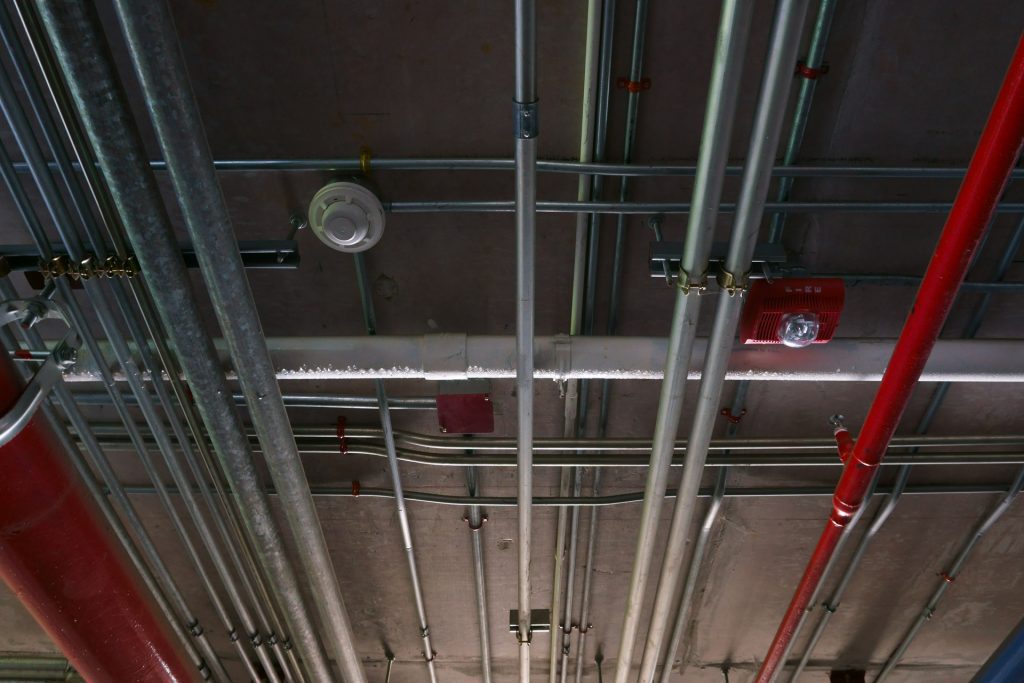
Distribution pipework is usually run in protected trenches or on supported routes along cabin rows, with isolation valves per block so maintenance does not shut the whole camp. Pipes exposed to direct sun must be UV resistant and insulated. Hot water for showers and kitchens can come from electric heaters, centralized systems, or solar water heaters, which suit the Saudi climate well and reduce generator load. Our plumbing contracting team sizes pipes, pumps, and heaters against real occupancy rather than rules of thumb alone.
Drainage and Sewage Collection
A sound drainage layout keeps wastewater moving away from living areas quickly and without odor. We typically separate:
- Black water from toilets, which requires full treatment or approved disposal.
- Grey water from showers, wash basins, and laundry, which may be treated for reuse in irrigation or dust suppression where permitted.
- Kitchen wastewater, which must pass through grease traps before joining the main sewer to prevent blockages.
- Stormwater, which is rare but can be intense in the Kingdom and should never overload the sewage system.
Gravity drainage with adequate falls, inspection chambers at changes of direction, and vented stacks remains the most dependable approach. Where levels do not allow gravity flow, lift stations with standby pumps and alarms are added.
Septic Tanks, Holding Tanks, or a Sewage Treatment Plant?
Choosing the disposal method is one of the biggest decisions in camp utilities. The table below summarizes the usual options.
| Option | Best suited to | Main considerations |
|---|---|---|
| Holding tanks with tanker removal | Small or short-duration camps | Simple to install, but depends on reliable, licensed vacuum-tanker service and approved disposal sites |
| Septic tanks with soak-away | Moderate camps where soil and regulations allow | Requires suitable ground conditions and authority acceptance, plus regular desludging |
| Packaged sewage treatment plant (STP) | Large or long-duration camps | Higher initial investment and skilled operation, but enables treated effluent reuse and lower tanker traffic |
For large workforces, a packaged STP is often the most practical choice, and treated effluent can support landscaping or dust control where approvals allow. Any choice must be coordinated with the relevant municipal and environmental authorities before installation.
Health, Hygiene, and Compliance
Saudi labor-accommodation standards place clear emphasis on adequate toilets, washing facilities, and safe drinking water for workers, and good sanitation also reduces sick days. Practical measures include:
- Enough toilets, showers, and wash basins for peak occupancy, with separate facilities where required.
- Regular water quality testing and cleaning of tanks.
- Pest control around drainage and waste areas.
- Clear maintenance logs for pumps, grease traps, and treatment units.
These measures sit alongside the wider welfare and safety checklist covered in our article on HSE requirements for temporary construction facilities, and the accommodation layout guidance in worker accommodation and labor camps in Saudi Arabia.
Integrating Water and Sewage with Other MEP Systems
Water systems never work alone. Pumps and heaters need dependable power, pump rooms may need ventilation, fire-fighting reserves must link to hydrants and hose reels, and level sensors can report to the camp's monitoring system. Coordinating all of this under one MEP contractor avoids clashes between trenches, cable routes, and foundations. We explain how these trades fit together in MEP services for temporary construction facilities. On sites where generator fuel is costly, solar PV systems can power pumps and water heating during daylight hours.
How BoldTarget Delivers Camp Water and Sewage Systems
As a general contractor with in-house MEP capability, BoldTarget handles water and sewage from concept to commissioning:
- Site assessment of water sources, soil conditions, and authority requirements.
- Demand calculations based on workforce size, phasing, and facility mix.
- Design of storage, distribution, drainage, and treatment, coordinated with the overall camp layout.
- Installation, pressure testing, and disinfection before occupation.
- Handover with operation guidance and, at project end, safe decommissioning of tanks and treatment units.
You can see how this integrated approach works in practice in our temporary construction facility project in Saudi Arabia.
Plan Your Camp Utilities with BoldTarget
Whether you are mobilizing a new site in Jubail, Dammam, or a remote location, early decisions on water and sewage save cost and risk for the whole project. BoldTarget can assess your site, propose the right supply and treatment strategy, and deliver it as part of a complete TCF package. Contact our team to discuss your construction camp requirements.
Frequently Asked Questions
What is the best sewage option for a large construction camp?
For large or long-duration camps, a packaged sewage treatment plant is usually the most practical option because it reduces tanker traffic and can allow treated effluent reuse where approvals permit. Smaller or short-term camps often use holding tanks or septic systems, subject to ground conditions and authority approval.
How is drinking water supplied on remote construction sites in Saudi Arabia?
Common options are tanker supply from approved sources, reverse osmosis or desalination units, a municipal connection where available, and bottled water at drinking points. Whatever the source, water must be stored in food-grade tanks and tested regularly.
Why should camp water tanks be shaded or insulated?
Summer heat in Saudi Arabia raises water temperatures quickly, which encourages algae and bacterial growth and makes water uncomfortable to use. Shading, insulation and sealed hatches help protect water quality and hygiene.
Can BoldTarget remove camp water and sewage systems at the end of a project?
Yes. BoldTarget plans decommissioning from the start, including emptying and cleaning tanks, removing treatment units through licensed contractors, and restoring the site as required by the contract.
Related TCF Guides
- Fire Safety for Temporary Construction Facilities in Saudi Arabia
- Modular Prefabricated Site Buildings in Saudi Arabia: A Guide
- Construction Site Layout Planning for Temporary Facilities in KSA
- Temporary Construction Facilities in Riyadh: City-Site TCF Guide
- TCF contractor in Saudi Arabia: explore our Temporary Construction Facilities services