A temporary construction facility is only as good as the services that run through it. Cabins, modular blocks and steel sheds provide shelter, but it is the mechanical, electrical and plumbing systems that make a camp livable, an office productive and a workshop safe. Getting MEP for temporary construction facilities right is especially important in Saudi Arabia, where summer heat, dust and remote locations put every system under pressure. This guide explains how power, HVAC, plumbing, fire fighting and extra-low-voltage (ELV) systems come together in a TCF, and why integrated design and delivery make the difference.
Why MEP Is the Heart of Any TCF
Temporary does not mean simple. A site camp may house a large workforce around the clock, while site offices host engineers, client representatives and sensitive IT equipment. These spaces need reliable power, effective cooling, clean water, safe drainage, fire protection and communications from the first day of occupation. When any one of these fails, the impact is immediate: lost working hours, uncomfortable living conditions or a real safety risk.
MEP also represents a large share of the effort and investment in most TCF packages. Planning it early, sizing it correctly and coordinating it with the building layout is the best way to control cost and schedule. That is why an experienced temporary construction facility contractor treats MEP as a core design discipline, not a list of items to add at the end.
Electrical Power and Lighting
Power is the first utility every site needs and the one that everything else depends on. A typical TCF electrical system includes:
- Power source: a grid connection where available, or diesel generator sets with backup capacity, increasingly combined with solar PV.
- Distribution: main and sub-distribution boards, protected cabling routes and feeder pillars serving each zone of the camp.
- Protection: correctly rated breakers, residual current devices and a tested earthing and bonding system.
- Lighting: internal lighting for buildings, external lighting for roads, walkways and laydown areas, plus emergency and exit lighting.
Load planning must account for the large share consumed by air conditioning in summer, as well as kitchens, laundries and workshops. Our electrical contracting services cover design, installation and testing, and our article on temporary power for construction sites explains the details further.
HVAC and Ventilation
In the Eastern Province and across much of the Kingdom, cooling is not a comfort extra; it is essential for health and productivity. HVAC choices for temporary facilities usually include split units and packaged units for cabins and modular blocks, with larger packaged or ducted systems for dining halls and open-plan offices. Key considerations are:
- Sizing for real peak summer conditions, including solar gain on lightweight buildings.
- Dust filtration and easy filter access, because sand-laden air quickly clogs coils and filters.
- Fresh-air ventilation and extraction for toilets, kitchens and laundries.
- Energy efficiency to reduce generator fuel use and running costs.
Good building insulation and sealed envelopes reduce the cooling load before any equipment is selected. BoldTarget's HVAC services team designs systems that suit both the climate and the temporary nature of the site. For more on unit selection, read our guide to HVAC for temporary site facilities.
Plumbing, Water Supply and Drainage
A camp's plumbing system has to deliver safe potable water and remove wastewater hygienically, often without a municipal connection. The main elements are:
- Water storage: elevated or ground tanks with booster pumps, sized for daily demand and supply interruptions.
- Distribution: pipework to toilets, showers, kitchens, laundries and ablution areas, with water heaters where required.
- Drainage: gravity drainage networks, manholes and connections to a municipal sewer, septic tanks or a packaged sewage treatment plant.
- Water quality: disinfection, regular tank cleaning and testing to protect occupants' health.
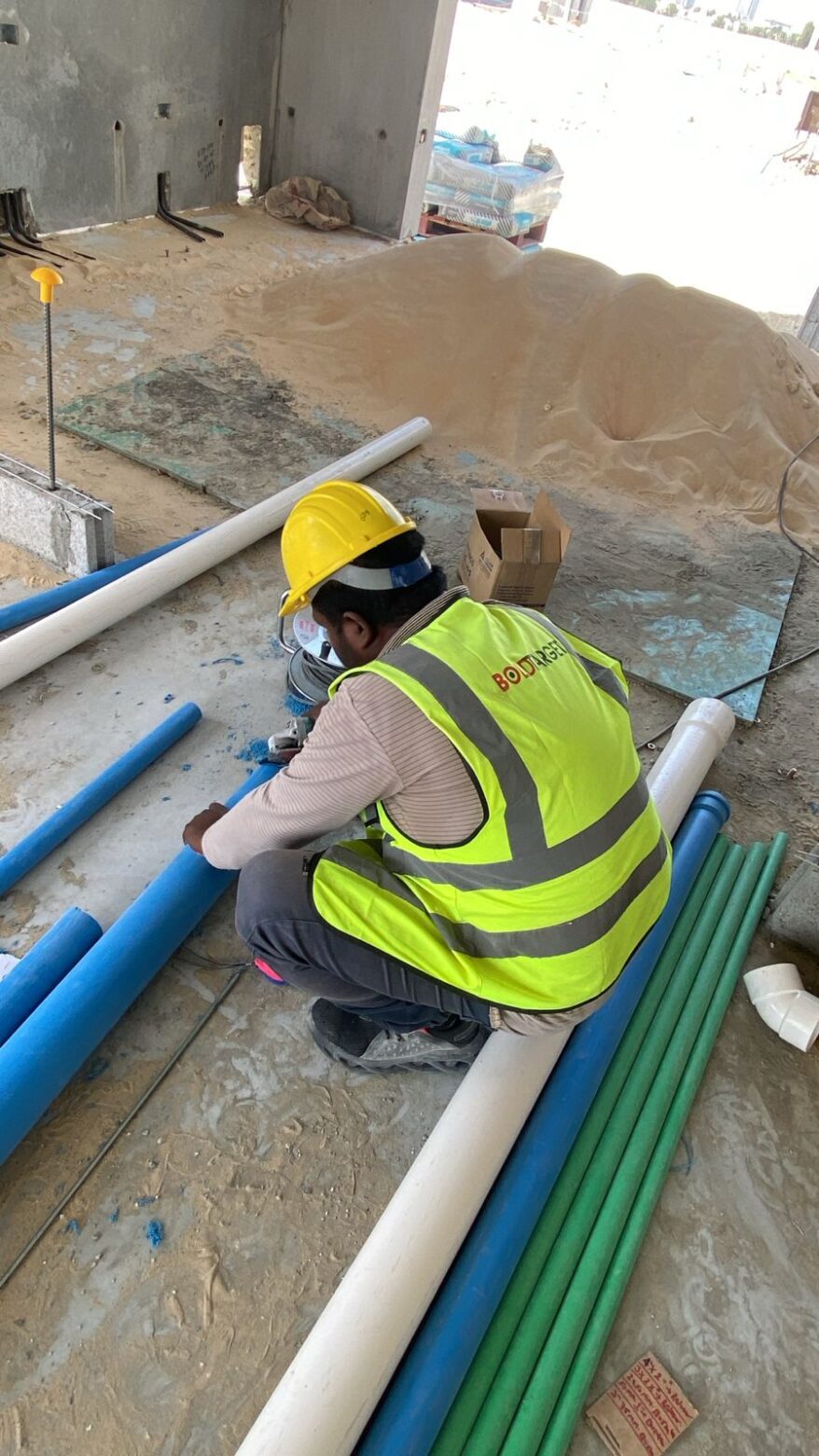
Pipework should be protected from direct sun, and fixtures should be robust enough for heavy daily use. Our plumbing services support these systems, and our article on water supply and sewage for construction camps covers options in depth.
Fire Fighting and Life Safety
Temporary buildings are often lightweight and closely spaced, and they house people who sleep on site. Fire safety therefore needs careful attention and must meet Saudi Civil Defense expectations. Typical measures include fire extinguishers matched to each hazard, fire hose reels or hydrants where required, fire water storage and pumps, kitchen hood suppression, and safe separation distances between blocks.
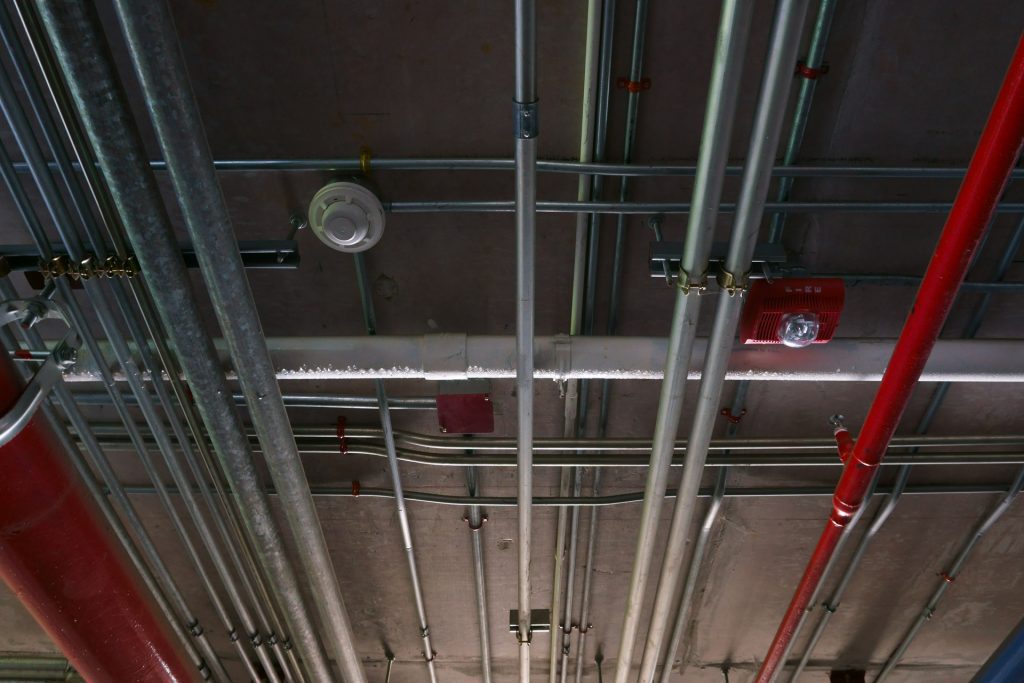
Fire detection and alarm systems, emergency lighting and clearly marked escape routes complete the picture. BoldTarget provides fire fighting and safety systems designed and installed to suit each facility's layout and occupancy.
Low Current and ELV Systems
Modern site facilities depend on data and security as much as on power and water. ELV systems in a TCF commonly include:
- CCTV covering gates, perimeters, stores and laydown yards.
- Access control and turnstiles for workforce management and site security.
- Structured cabling, Wi-Fi and network infrastructure for offices and accommodation.
- Fire alarm panels, public address systems and intercoms.
Planning containment and cable routes together with power distribution avoids rework later. Our low current systems team delivers these networks as part of the wider MEP package.
Bringing It Together: Coordination, Testing and Handover
The real value comes from treating all these services as one integrated system. Coordinated MEP design ensures that generator capacity matches the actual HVAC load, that plant rooms and tanks sit where they can be serviced, that cable and pipe routes do not clash, and that future expansion blocks can be connected easily. On site, integrated delivery means fewer interfaces, clearer responsibility and faster commissioning.
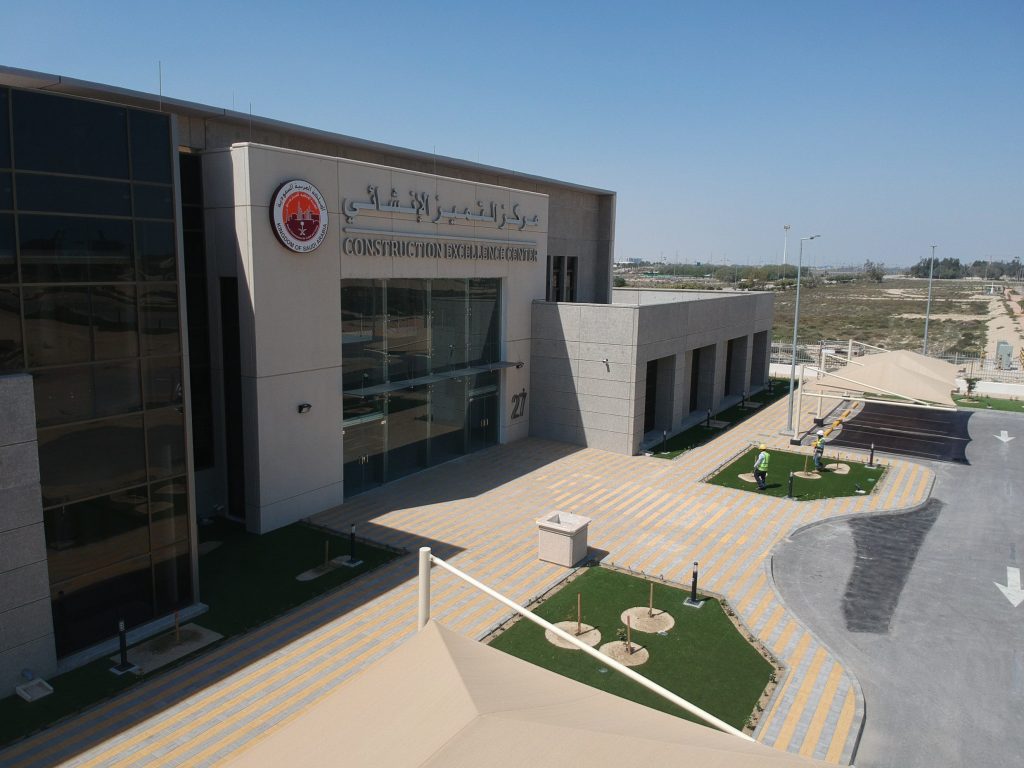
Before occupation, every system should be tested and commissioned: insulation and earthing tests, HVAC performance checks, pressure tests for pipework and functional tests of fire and ELV systems. Handover should include as-built drawings, operation and maintenance information and a practical maintenance plan. As an integrated MEP contractor, BoldTarget manages these steps under one team, as demonstrated in our TCF project in Saudi Arabia.
Talk to BoldTarget About Your TCF MEP Package
Whether you need a small site office complex or a large worker camp, the right MEP strategy keeps people comfortable, safe and productive while controlling running costs. BoldTarget combines general contracting and full MEP capability from its base in Khobar to deliver services that work from day one. Get in touch with our engineers to discuss your requirements, or learn more about our complete TCF services.
Frequently Asked Questions
What MEP systems does a temporary construction facility need?
Most TCFs need electrical power and lighting, HVAC and ventilation, potable water supply and drainage, fire fighting and fire alarm systems, and low-current systems such as CCTV, access control and data networks. The exact scope depends on the facility's size, occupancy and location.
Why is integrated MEP design important for a TCF?
Integrated design ensures that power capacity matches cooling and other loads, that services do not clash, and that the facility can be expanded easily. It also reduces interfaces between contractors, which helps control cost, schedule and quality.
How is a temporary camp powered if there is no grid connection?
Remote camps are usually powered by generator sets with backup capacity, and many now add solar PV and battery storage to cut fuel use. A distribution network with proper protection and earthing then delivers power safely to each building.
Can BoldTarget deliver the full MEP scope for a TCF?
Yes. BoldTarget provides electrical, HVAC, plumbing, fire fighting and low-current systems as one integrated package, alongside civil and building works, with testing, commissioning and handover documentation.
Related TCF Guides
- Temporary Power for Construction Sites in Saudi Arabia: A Guide
- HVAC for Temporary Site Facilities: Cooling in Saudi Conditions
- Water and Sewage for Construction Camps in Saudi Arabia
- Fire Safety for Temporary Construction Facilities in Saudi Arabia
- Explore our Temporary Construction Facilities (TCF) services