Temporary buildings are built fast, placed close together, and filled with people, cables, cooking equipment, and stored materials. That combination makes fire safety for temporary construction facilities a priority from the first day of design, not a checklist item before occupation. In Saudi Arabia, site offices, labor camps, canteens, and stores are expected to meet Saudi Civil Defense requirements and the fire-protection principles of the Saudi Building Code (SBC), just like permanent buildings, adapted to their temporary nature. This article explains what that means in practice and how BoldTarget builds fire safety into its temporary construction facility services.
Why Temporary Facilities Carry Higher Fire Risk
Fire risk on a site camp is not theoretical. Several factors raise it compared with a typical permanent building:
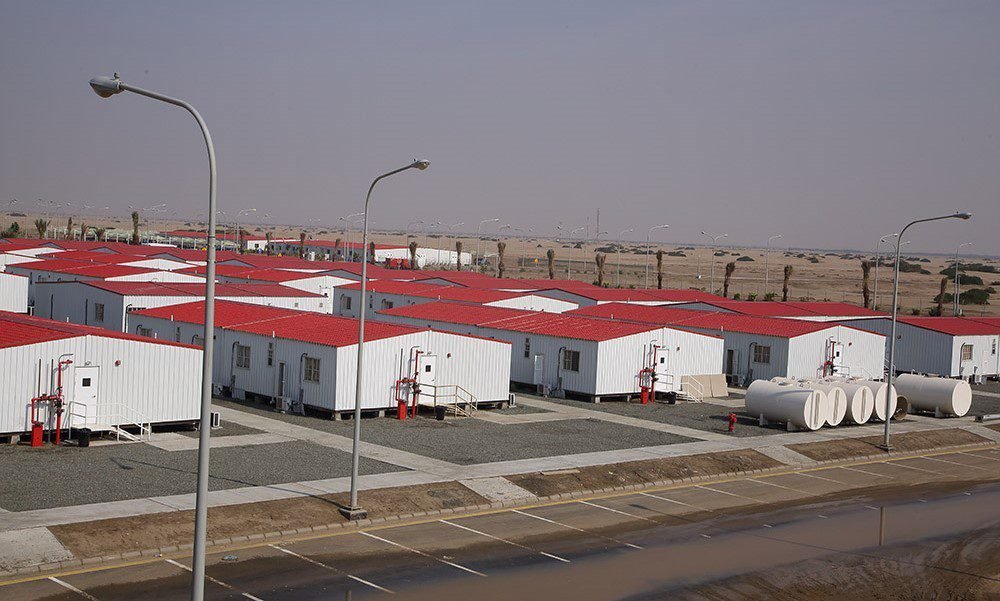
- Dense layouts: cabins and modular units are often placed close together to save space, which can let fire spread from one unit to the next.
- Combustible materials: some cabin panels, furniture, bedding, and stored packaging burn easily if not specified correctly.
- Electrical load: air conditioners, water heaters, kitchens, and personal devices running on temporary distribution increase the chance of overloads and faults.
- Hot work and fuel: welding, cutting, generators, and fuel storage sit close to occupied areas on many sites.
- Heat and dust: Eastern Province summer temperatures stress cables and equipment, while dust buildup in panels and units adds ignition risk.
- Night occupancy: accommodation blocks hold sleeping workers, so detection and escape must work without relying on people noticing a fire.
Civil Defense Expectations and Approvals
Saudi Civil Defense oversees fire safety for occupied buildings, and temporary facilities are no exception. Requirements vary with facility type, size, and occupancy, and project owners often add their own HSE and fire-safety standards, which on large developments can be stricter than the minimum. In general, clients should expect reviews covering:
- Fire alarm and detection coverage appropriate to each building type.
- Portable extinguishers of the right type and quantity, with clear signage.
- Fire-fighting water supply, hydrants, and hose reels where required.
- Escape routes, exits, emergency lighting, and assembly points.
- Separation distances and fire-rated construction between building groups.
- Safe storage of fuels, gas cylinders, and flammable materials.
Because detailed requirements depend on the specific project and authority, we confirm the applicable standards during design and plan inspections into the program rather than leaving them to the end.
Fire Detection and Alarm Systems
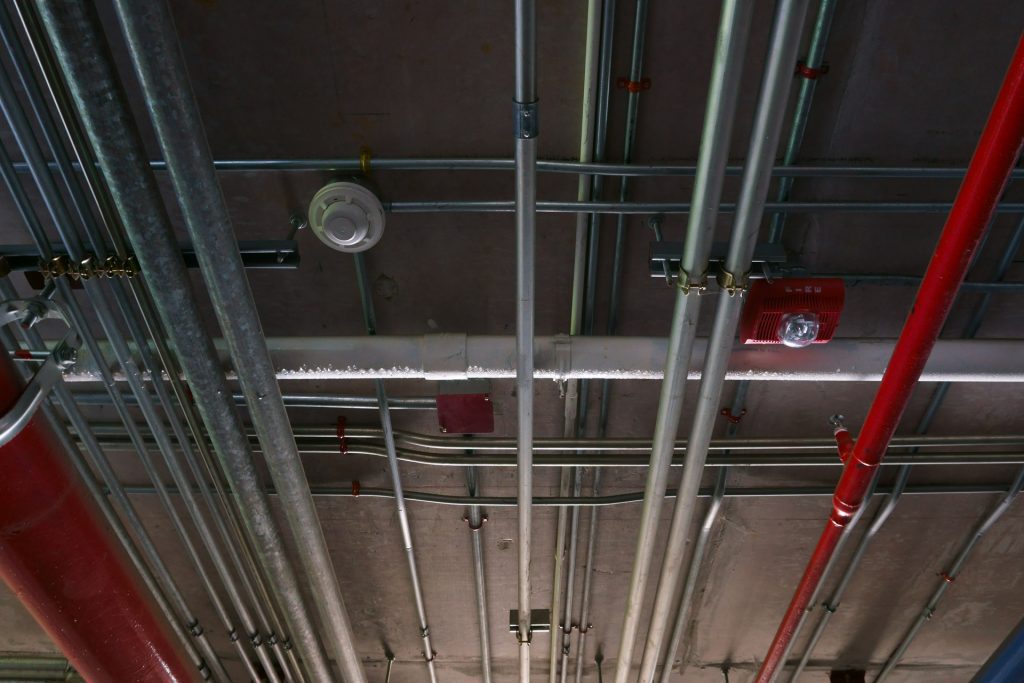
Early warning saves lives, especially in sleeping quarters. A typical camp fire alarm design includes smoke detectors in bedrooms and corridors, heat detectors in kitchens and laundries where smoke detectors would cause false alarms, manual call points at exits, and sounders and visual beacons that can be heard and seen throughout each block.
On larger camps, addressable fire alarm panels make it easy to identify exactly where an alarm started, and individual block panels can be networked back to a central security or control room. Our low current systems team designs and installs fire alarm networks alongside CCTV, access control, and public address so that alerts reach the people who need to act.
Fire Fighting Equipment and Water Supply
Portable extinguishers
Extinguishers are the first line of response. Selection should match the hazard: water or foam for general areas, CO2 near electrical panels, wet chemical in kitchens, and dry powder for mixed risks and generator areas. They must be mounted visibly, kept accessible, and inspected on a regular schedule.
Hose reels, hydrants, and fire water
Larger camps and those far from public fire services usually need a dedicated fire water reserve, fire pumps, and a ring main feeding hydrants and hose reels. The reserve should be protected from being drawn down for domestic use. Kitchens may also require suppression systems over cooking ranges. As a specialist in fire fighting and fire safety systems, BoldTarget sizes and installs these systems and coordinates them with the camp's water network.
Layout Spacing, Escape Routes, and Construction
Good fire safety starts on the site plan. Decisions made at layout stage often matter more than any single device:
- Separation between building groups to limit fire spread, with fire breaks along long rows of cabins.
- Clear fire access roads wide enough for emergency vehicles, kept free of parked equipment and materials.
- Hazard zoning that keeps generators, fuel tanks, gas cylinder cages, and hot-work areas away from accommodation and offices.
- Two ways out from accommodation blocks where required, with doors opening in the direction of escape.
- Emergency lighting and exit signs along corridors and outside routes to assembly points.
- Fire-performance materials: panels, insulation, and finishes with suitable fire ratings rather than the cheapest option.
We cover zoning and access in more detail in our guide to construction site layout planning.
Electrical Safety as Fire Prevention
Many fires in temporary buildings start with electrical faults. Correctly rated cables, protected distribution boards, residual current devices, proper earthing, and regular visual or thermographic inspections all reduce risk. Temporary power should be designed, not improvised. Our electrical contracting services and the article on temporary power for construction sites explain how safe distribution is set up from generator to socket.
Management, Training, and Inspections
Systems only work if people maintain and understand them. An effective fire safety program for a camp includes:
- A written fire and emergency plan with roles, alarm procedures, and assembly points.
- Induction and regular fire drills for residents and staff, in languages workers understand.
- Trained fire wardens for each block or shift.
- Scheduled testing of alarms, emergency lighting, pumps, and extinguishers, with records kept.
- Hot-work permits and housekeeping rules that prevent waste and packaging from piling up.
These measures fit within the broader framework described in HSE requirements for temporary construction facilities and in BoldTarget's HSE policy.
How BoldTarget Integrates Fire Safety into TCF
Because BoldTarget delivers civil, building, and MEP works together, fire safety is designed in rather than added on. Fire alarm, fire fighting, electrical, and layout decisions are coordinated by one team, which reduces gaps between trades and makes approvals smoother. You can see this integrated delivery in our TCF project in Saudi Arabia.
Make Your Site Facilities Safe from Day One
Fire safety is far easier and cheaper to build into a temporary facility at design stage than to retrofit after an inspection. If you are planning site offices, worker accommodation, or stores, BoldTarget can design and deliver a compliant, practical solution as part of a complete TCF package. Get in touch with our team to review your project's fire safety needs.
Frequently Asked Questions
Do temporary site buildings need Civil Defense approval in Saudi Arabia?
Occupied temporary facilities such as site offices, accommodation and canteens are generally expected to meet Saudi Civil Defense fire-safety requirements, and project owners often add their own standards. Exact requirements depend on the facility and the authority, so they should be confirmed during design.
What type of fire detection is used in labor camp accommodation?
Smoke detectors are typical in bedrooms and corridors, heat detectors in kitchens and laundries, manual call points at exits, and sounders throughout each block. Larger camps often use addressable panels linked to a central control or security room.
How far apart should site cabins be placed?
Separation distances depend on the building construction, fire ratings, occupancy and the standards applied to the project. They are set during layout design together with fire access roads and fire breaks, and confirmed with the relevant authority.
What are common causes of fires in temporary facilities?
Electrical faults, overloaded temporary distribution, cooking, hot work and poor housekeeping are common causes. Properly designed electrical systems, safe storage of fuels and gas cylinders, and regular inspections reduce the risk significantly.
Related TCF Guides
- Modular Prefabricated Site Buildings in Saudi Arabia: A Guide
- Construction Site Mobilization in Saudi Arabia: Planning Guide
- HSE for Temporary Construction Facilities: A Saudi Site Guide
- TCF Cost in Saudi Arabia: Key Drivers, Rent vs Buy and Savings
- Explore our Temporary Construction Facilities (TCF) services