Choosing the right building system is one of the first decisions in any site setup, and it shapes cost, speed, comfort, and how easily facilities can be moved or reused later. Modular prefabricated site buildings in Saudi Arabia range from simple porta cabins to engineered modular complexes and pre-engineered steel buildings (PEB). Each has its place, and the best camps often combine more than one. This guide compares the main options, explains where each works best, and shows why insulation and MEP integration matter as much as the structure itself. It draws on how BoldTarget plans buildings within its temporary construction facility services.
Why Prefabricated Buildings Dominate Temporary Facilities
Construction sites need offices, accommodation, canteens, and stores quickly, often before roads and utilities are complete. Prefabrication moves most of the work into a factory, where quality is easier to control and weather does not slow progress. On site, the work shrinks to foundations, placement, connections, and finishing. Other advantages include:
- Shorter mobilization periods and earlier occupation.
- Predictable quality from repeatable factory processes.
- Less site labor, waste, and disruption.
- Relocation and reuse on future projects.
- Easier expansion as the workforce grows.
Option 1: Porta Cabins
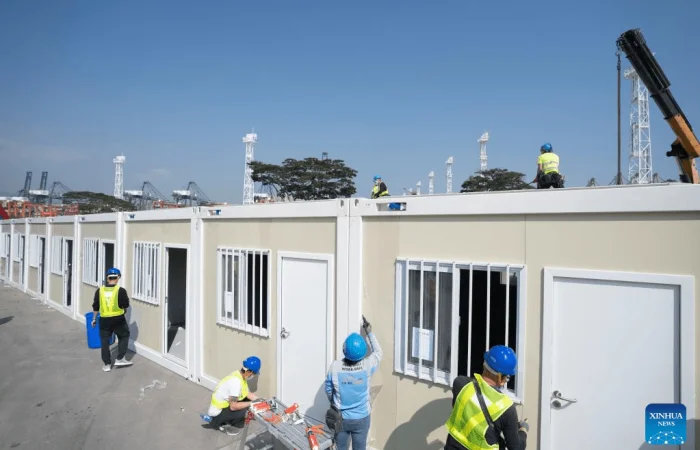
Porta cabins are self-contained single units, usually built on a steel frame with sandwich panel walls, delivered ready-finished and placed by crane. They are the most familiar temporary building in the Kingdom.
Strengths
- Fast to deliver and install, often with minimal foundations.
- Easy to move between sites or reposition within a site.
- Widely available for rent or purchase.
Limitations
- Fixed sizes restrict room layouts and larger open spaces.
- Lower-grade units may have thin insulation, which drives up cooling loads in summer.
- Many separate units mean many separate connections for power, water, and drainage.
Porta cabins suit guard rooms, small site offices, early mobilization, and short-duration needs.
Option 2: Modular Buildings
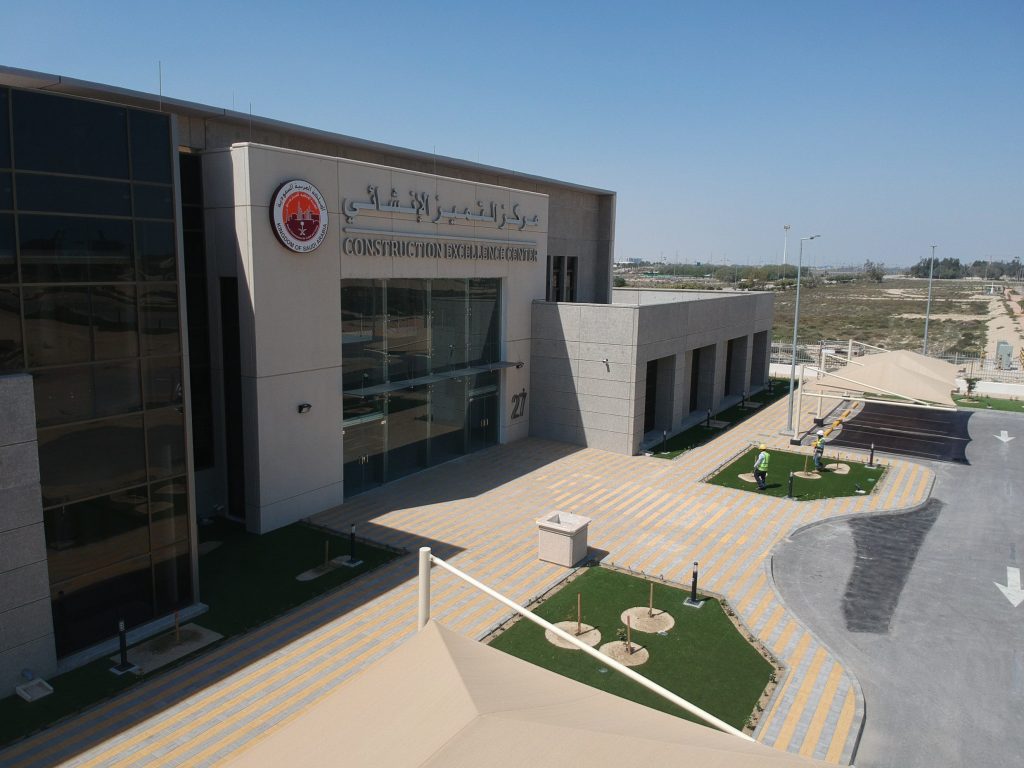
Modular buildings are made of factory-built volumetric modules or panelized systems that join together on site to form larger buildings, including multi-storey blocks. They can create corridors, larger offices, meeting rooms, dormitories, clinics, and dining halls that behave like permanent buildings.
Strengths
- Flexible layouts and larger spaces than standalone cabins.
- Better finishes and better acoustic and thermal performance when specified well.
- Stacking options that save land on congested sites.
- Centralized MEP services serving a whole block.
Limitations
- More design coordination and proper foundations are required.
- Lead times are longer than for off-the-shelf cabins.
- Transport and crane access must be planned around module sizes.
Modular systems are often the best fit for medium and long-duration projects, which we discuss further in our articles on temporary site offices in Saudi Arabia and worker accommodation and labor camps.
Option 3: Pre-Engineered Buildings (PEB)
Pre-engineered steel buildings use factory-fabricated steel frames clad with insulated panels. They create wide, column-free spaces that cabins and modules cannot match. In a temporary facility, PEB structures are ideal for:
- Workshops, fabrication sheds, and maintenance bays.
- Central stores and covered laydown areas.
- Large canteens, prayer halls, and recreation buildings.
- Facilities that may later be dismantled and reused, or retained as permanent assets.
BoldTarget designs and builds industrial and pre-engineered buildings and applies the same expertise to warehouse construction, which makes PEB a natural choice when a project needs large covered space alongside its camp.
Comparing the Options
| Factor | Porta cabins | Modular buildings | PEB |
|---|---|---|---|
| Speed of installation | Fastest | Fast | Moderate |
| Layout flexibility | Low | Medium to high | High, with large clear spans |
| Typical uses | Guard rooms, small offices | Offices, accommodation, clinics | Workshops, stores, large halls |
| Foundations | Minimal | Designed footings or slabs | Engineered foundations |
| Relocation | Very easy | Possible with planning | Possible by dismantling |
| Thermal performance | Varies widely | Good when specified | Good with insulated cladding |
Insulation: The Factor Most Buyers Underestimate
In the Eastern Province, summer heat and humidity turn poorly insulated buildings into ovens and keep air conditioning running around the clock. Insulation affects comfort, power demand, generator size, and fuel cost for the life of the facility. Key points to check:
- Panel type and thickness: polyurethane, PIR, and rock wool cores perform differently in thermal and fire terms.
- Fire performance: materials should meet the fire-safety expectations of Civil Defense and the project owner; rock wool and fire-rated cores are often preferred for accommodation.
- Roof insulation and reflective finishes: the roof takes the most solar gain.
- Sealing and thermal bridges: gaps at joints and around doors let hot air and dust in.
- Condensation control: vapor barriers protect panels and interiors where cooled air meets humid outside conditions.
As a contractor that also delivers insulation and fireproofing works, BoldTarget treats the building envelope as a performance system rather than a commodity.
MEP Integration Makes or Breaks Prefabricated Buildings
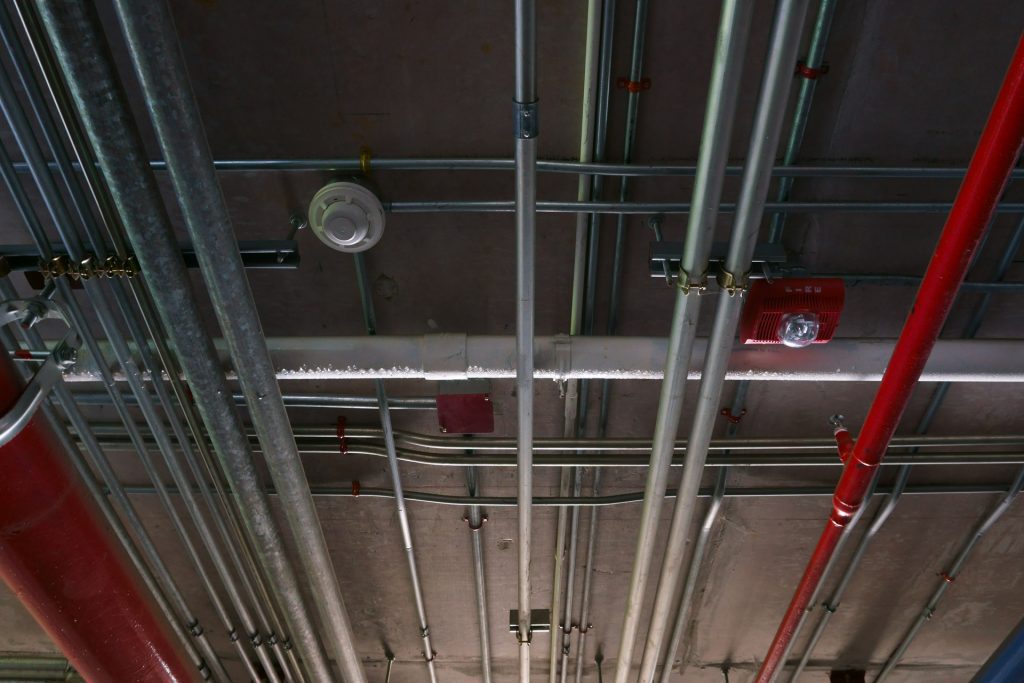
A prefabricated building is only as good as its services. Cooling, power, lighting, plumbing, fire alarms, and data must be planned with the building system, not added later. Split units suit cabins, while modular blocks and PEB halls may justify ducted or packaged systems. Our HVAC services select equipment for Saudi conditions, and the article on HVAC for temporary site facilities explains cooling choices in detail.
How to Choose the Right Mix
Most projects benefit from a blended approach. Ask these questions early:
- How long will the facility be needed, and will it be relocated or reused?
- How many people will it house or serve at peak?
- Which spaces need large clear spans, and which need many small rooms?
- What are the site constraints for transport, cranes, and land area?
- Which client, Civil Defense, and accommodation standards apply?
- Is buying, renting, or a combination better for the project budget?
As a general contractor, BoldTarget reviews these factors with clients and proposes a building mix and phasing plan. Our TCF project in Saudi Arabia shows how building systems, utilities, and site works come together in one delivery.
Plan Your Site Buildings with BoldTarget
The right building system saves time at mobilization and money throughout the project. Whether you need a few porta cabins, a full modular camp, or PEB workshops and stores, BoldTarget can design, supply, install, and service them as part of a complete temporary facilities solution. Contact BoldTarget to discuss the best option for your site.
Frequently Asked Questions
What is the difference between a porta cabin and a modular building?
A porta cabin is a single self-contained unit with fixed dimensions, while a modular building joins several factory-built modules or panels on site to create larger, more flexible spaces, including corridors, halls and multi-storey blocks.
When is a pre-engineered building better for a temporary facility?
A PEB suits spaces that need wide, column-free areas such as workshops, central stores, large canteens and halls, or facilities that may later be dismantled and reused or kept as permanent assets.
Which insulation is best for site buildings in Saudi Arabia?
It depends on the thermal and fire-safety requirements. Polyurethane and PIR cores offer good thermal performance, while rock wool cores are often preferred where fire performance is a priority, such as accommodation. Roof insulation and good sealing matter as much as the panel choice.
Should we rent or buy prefabricated site buildings?
Renting can suit short durations and changing needs, while buying may suit longer projects or companies that can reuse units on future sites. BoldTarget reviews project duration, reuse plans and specifications to recommend the right mix.
Related TCF Guides
- Construction Site Mobilization in Saudi Arabia: Planning Guide
- HSE for Temporary Construction Facilities: A Saudi Site Guide
- TCF Cost in Saudi Arabia: Key Drivers, Rent vs Buy and Savings
- Temporary Facilities in Jubail and Dammam for Industrial Projects
- Explore our Temporary Construction Facilities (TCF) services