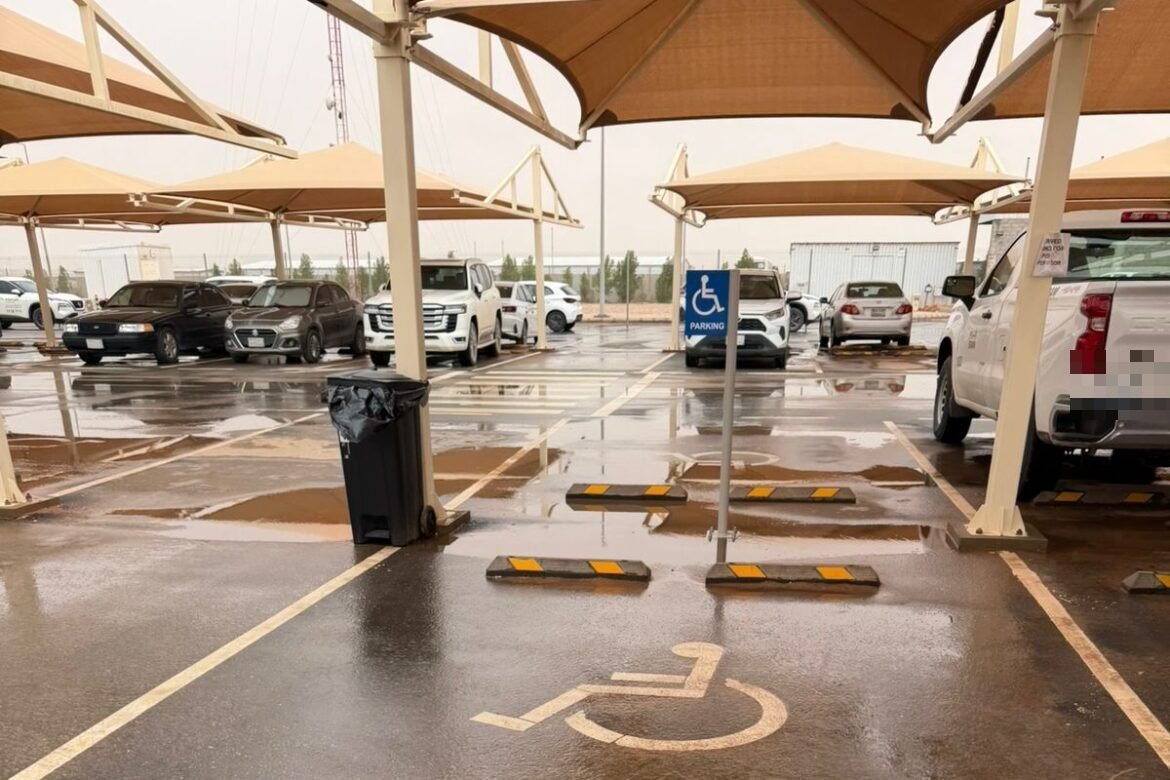
Every construction project depends on access. Before the first foundation is poured, trucks, cranes, buses and emergency vehicles need a route in and space to park, turn and unload. Well-planned temporary site roads and parking keep deliveries moving, keep dust down and keep people safe; poorly planned ones turn into rutted, flooded or dusty bottlenecks that slow every trade on site. This guide explains how to plan, build and maintain temporary access roads, parking areas and traffic routes for projects in Saudi Arabia, from the Eastern Province industrial belt to remote desert sites.
Why Temporary Roads Deserve Early Attention
Access is often treated as an afterthought, something the earthworks crew will sort out once mobilization starts. In practice, roads and parking shape the entire site logistics plan. They decide where the temporary warehouses and laydown areas sit, how concrete trucks reach the pour, where workers are dropped off and how an ambulance reaches the clinic. Fixing a bad road layout after the site offices, fences and utilities are installed is slow and expensive, because the road is usually sitting on top of, or right next to, buried cables and pipes.
As an experienced TCF contractor in Saudi Arabia, BoldTarget plans access together with the rest of the temporary facilities, so road alignments, utility corridors and drainage are coordinated on one drawing instead of clashing in the field. Roads should be a core layer of any construction site layout plan, not something added once the cabins have arrived.
Types of Temporary Site Roads
Not every route on site carries the same load or the same traffic. Grouping roads by function helps you spend money where it matters:
- Main access road: connects the public road to the site gate and carries heavy delivery traffic, concrete trucks, low-bed trailers and buses.
- Internal haul roads: link the gate to laydown areas, batching areas, workshops and work fronts; they take repeated heavy axle loads.
- Light vehicle and service roads: serve the site office compound, worker accommodation and welfare buildings.
- Emergency routes: kept clear at all times for ambulances and Civil Defense fire appliances, with adequate width and turning space.
- Pedestrian walkways: separated from vehicles by barriers, kerbs or marked routes, especially between accommodation, mess halls and work areas.
Choosing the Right Surface: Gravel, Stabilized Base or Asphalt
The surface choice depends on traffic, project duration, soil conditions and how much dust the site can tolerate. A short project with light traffic may run on compacted aggregate; a multi-year industrial project with constant heavy deliveries often justifies a sealed or asphalt surface on the main routes.
| Surface option | Best suited to | Advantages | Limitations |
|---|---|---|---|
| Graded and compacted native soil | Very short durations, light traffic, low-priority tracks | Fast and simple to form | Dusty, ruts quickly, soft after rain |
| Compacted aggregate base (gravel or crushed stone) | Most internal haul roads and parking areas | Good load support, drains reasonably, easy to repair and remove | Needs regular grading and dust suppression |
| Stabilized base (cement or lime treated) | Weak or sandy subgrades, longer projects | Stiffer, less rutting and less dust than loose gravel | Requires testing and curing; harder to remove at demobilization |
| Asphalt or sealed surface | Main access roads, gate areas, bus bays, long-duration projects | Low dust, clean, durable under heavy traffic | Higher initial cost; removal and disposal must be planned |
| Interlocking pavers or precast slabs | Office compounds, pedestrian zones, areas planned for reuse | Neat appearance, can be lifted and reused | Not ideal for very heavy repeated loads without a strong base |
Whatever the surface, performance comes from what is underneath. A proper subgrade survey, removal of unsuitable material, layered compaction with field density testing and a correctly designed aggregate base matter more than the wearing course. These are the same disciplines our general contracting teams apply to permanent works, and they are what separate a road that lasts the whole project from one that needs rebuilding after the first heavy season.
Drainage: The Most Common Reason Temporary Roads Fail
Rain is infrequent in much of the Kingdom, but when it comes it can be intense, and flat desert sites can flood quickly. A road with no camber and no side drains becomes a pond, then a mud track, then a rutted surface that damages vehicles for months. Good practice includes:
- Building roads slightly above surrounding ground with a crossfall so water runs off.
- Side ditches or swales leading to a safe discharge point or soakaway.
- Culverts where roads cross natural flow paths or utility trenches.
- Keeping wash-down water from wheel-wash bays and workshops away from road edges.
- Coordinating road levels with the site plumbing and drainage network so camp sewage and stormwater lines are not crushed under haul routes.
Dust Control in Saudi Conditions
Dust is a health issue, a nuisance to neighbours and a maintenance problem for site office air-conditioning filters, generators and equipment. Clients and consultants increasingly expect a dust management plan as part of the HSE submission. Typical measures include water bowsers on a set spraying routine, dust suppressants or binders on high-traffic gravel roads, speed limits on unsealed roads, wheel-wash facilities at the exit gate, and sealing the busiest sections near offices and accommodation. Treated wastewater may be suitable for road spraying where the client and the authorities allow it, which reduces demand on trucked water. Dust measures should be part of the overall health, safety and environment approach, not an add-on after the first complaint.
Parking, Bus Bays and Drop-Off Zones
Parking demand on a large project comes from several groups with very different needs: worker buses at shift change, staff and visitor cars, delivery trucks waiting for entry and plant parked overnight. Plan each one separately.
Worker buses
Shift changes create peaks where many buses arrive together. Bus bays should allow drive-through movement without reversing, a shaded waiting area and a safe pedestrian route from the bay to the accommodation or the work area. In summer, shade and drinking water at bus pick-up points are part of heat-stress management.
Staff and visitor parking
Locate staff and visitor parking outside the construction zone, close to the site office compound and the security gate, so visitors do not need to drive through active work areas. Shade structures help in the heat and protect vehicles.
Truck holding areas
A holding area outside or just inside the gate stops delivery trucks queuing on the public road, which is a common source of complaints from municipalities and neighbouring facilities.
Lighting
Roads, gates and parking need adequate lighting for night shifts and security. Our electrical team designs temporary street lighting and floodlighting together with the site power distribution, so poles, cables and road crossings are coordinated from the start.
Traffic Management Plan
A temporary road network only works if traffic follows clear rules. A site traffic management plan normally covers:
- One-way loops where possible, to reduce reversing, which causes many site incidents.
- Speed limits and signage at the gate and at junctions.
- Segregation of pedestrians from vehicles, with marked crossings and barriers.
- Banksmen at reversing points, crane zones and laydown areas.
- Gate procedures: vehicle checks, delivery booking and driver induction.
- Coordination with the authorities if site traffic enters or crosses a public road.
The traffic plan and the physical road layout should be developed together during pre-construction planning, along with the boundary and entrances described in our guide to construction site hoarding, fencing and gates.
Maintenance and Demobilization
Temporary roads need maintenance throughout the project: regrading, pothole repairs, topping up aggregate, clearing drains and renewing markings. Assign this to a named team with a routine rather than waiting for complaints. At demobilization, the contract should state whether roads are removed, left for the permanent works or handed to the owner. Gravel can often be reused as fill; asphalt must be removed and disposed of correctly. Undersized roads and forgotten drainage appear regularly in our list of common TCF mistakes to avoid, and both are far cheaper to prevent than to repair.
Plan Your Site Access with BoldTarget
BoldTarget designs and builds site roads, parking, bus bays and drainage as part of complete temporary construction facilities, together with offices, accommodation, power, water and security, so one contractor is accountable for how the whole site works. See how we delivered a temporary construction facility project in Saudi Arabia, then contact our team to discuss access, roads and parking for your next project.
Frequently Asked Questions
What is the best surface for a temporary construction site road?
For most internal haul roads and parking areas, a well-compacted aggregate base gives the best balance of strength, cost and ease of removal. Main access roads, gate areas and bus bays on long projects often justify asphalt or a sealed surface to cut dust and maintenance. The right choice depends on traffic, duration, soil conditions and dust limits.
How do you control dust on temporary site roads in Saudi Arabia?
Common measures are scheduled water spraying, dust suppressants on busy gravel roads, speed limits, wheel-wash bays at the exit and sealing the busiest sections near offices and accommodation. The measures should be written into the site dust or HSE management plan and checked during inspections.
Who is responsible for temporary roads and parking on a project?
It depends on the contract. Usually the TCF or main contractor builds and maintains roads inside the site boundary, while connections to public roads may need authority approvals arranged with the owner. A clear scope matrix in the contract avoids gaps between parties.
Do temporary site roads really need drainage?
Yes. Rain is infrequent in Saudi Arabia but often intense, and roads without camber, side drains or culverts can flood and break up quickly. Drainage should also be coordinated with buried sewage and stormwater lines so haul routes do not damage them.
Related TCF Guides
- Construction Site Hoarding in Saudi Arabia: Fencing and Gates Guide
- Construction Site Workshops and Fabrication Yards: Planning Guide
- TCF Permits and Approvals in Saudi Arabia: A Practical Guide
- TCF Cost in Saudi Arabia: Key Drivers, Rent vs Buy and Savings
- TCF contractor in Saudi Arabia: explore our Temporary Construction Facilities services