Temporary construction facilities have traditionally relied on diesel generators running around the clock. That model is changing. Clients, developers and contractors are increasingly asking for solar powered site facilities in Saudi Arabia to reduce fuel consumption, noise and emissions while keeping offices, camps and site services running reliably. With some of the strongest solar resources in the world and clear national sustainability goals under Vision 2030, the Kingdom is an ideal place to rethink how temporary sites are powered. This article explains the options and how they fit into a complete temporary construction facility (TCF) package.
Why sustainability now matters for temporary facilities
A temporary site can operate for months or years, and over that period its energy and water use add up. Several drivers are pushing sustainability up the agenda:
- National direction – Vision 2030 and the Saudi Green Initiative place emphasis on renewable energy and lower emissions.
- Client requirements – many developers, including those behind giga-projects such as NEOM and the Red Sea destinations, publish environmental expectations that extend to contractors' site facilities.
- Operating cost and logistics – every litre of diesel saved is fuel that does not need to be bought, delivered, stored and managed on site.
- Site environment – fewer running generators means less noise and fumes near offices and worker accommodation.
- Reliability – a well-designed hybrid system reduces generator running hours and the maintenance that comes with them.
Where solar power fits on a construction site
Solar works best where loads are predictable and largely occur during the day, which matches much of a construction site's demand. Typical applications include:
- Site offices, meeting rooms and welfare buildings.
- External and perimeter lighting combined with battery storage.
- CCTV poles, access control points and communication equipment at remote locations.
- Water pumping, filtration and small treatment units.
- Worker accommodation, partly offsetting daytime air conditioning loads.
- Small standalone units such as gatehouses, security posts and first aid rooms.
System options: off-grid, hybrid and grid-connected
Off-grid solar with battery storage
For small, isolated loads such as lighting towers, camera poles or gatehouses, a self-contained system of PV panels, batteries and an inverter can remove the need for a generator altogether. These units are simple to relocate as the site evolves.
Hybrid solar-diesel systems
For offices and camps, the most practical approach is usually a hybrid system. Solar panels supply power during the day, batteries smooth out peaks and support evening loads, and a generator starts only when needed. A smart controller manages the sources automatically. The generator can often be sized smaller and runs fewer hours, at a more efficient load. Our article on temporary power for construction sites explains how this integrates with the overall distribution system.
Grid-connected solar
Where a utility connection is available, solar can reduce the energy drawn from the grid during daytime hours. This is more common on longer-duration facilities and depends on the connection arrangements and approvals that apply to the site.
Designing solar for Saudi site conditions
A solar system that performs well in a brochure can disappoint on site if local conditions are ignored. Key design points include:
- Accurate load assessment – air conditioning is typically the largest load, so cooling demand must be estimated carefully across seasons.
- Heat derating – PV output and battery life are affected by high temperatures, so equipment selection and ventilation of battery enclosures matter.
- Dust and soiling – panels in the Eastern Province collect dust quickly; a realistic cleaning plan and accessible layout are essential.
- Wind and mounting – ground-mounted skids, container-roof frames or carport-style structures must be properly secured.
- Relocatability – modular, pre-wired systems can be dismantled and reused on the next project, improving the overall value.
BoldTarget's solar PV EPC team handles design, supply, installation and commissioning, while our electrical contracting team integrates the system with generators, distribution boards and earthing so the whole site works as one network.
Reduce demand first: efficient buildings and cooling
The cheapest energy is the energy a site never needs. Before sizing solar arrays, it pays to reduce demand:
- Well-insulated modular buildings with good seals and shaded windows.
- Efficient inverter air conditioners, correctly sized and maintained.
- Thermostat settings and occupancy controls in offices and meeting rooms.
- LED lighting with timers and photocells for external areas.
Our HVAC specialists select and size cooling systems for temporary buildings in Saudi heat; for more on this topic, see our guide to HVAC for temporary site facilities.
Saving water on temporary sites
Sustainability is not only about energy. Water is a precious resource in the Kingdom, and camps and offices can use a lot of it. Practical measures include:
- Low-flow taps, showers and dual-flush toilets in welfare facilities.
- Leak detection and regular inspection of tanks and pipework.
- Treated wastewater reuse for dust suppression or landscaping where permitted by the authorities and the client.
- Solar-powered pumping and solar water heating for accommodation blocks.
BoldTarget's plumbing team designs water and drainage systems with these principles in mind. Read more in our article on water supply and sewage for construction camps.
Planning a sustainable TCF
The best results come when sustainability is considered at the planning stage rather than added later. A practical sequence is:
- Define the client's environmental requirements and any reporting obligations.
- Estimate loads for each building and service across the project duration.
- Reduce demand through building, cooling and lighting choices.
- Select the power configuration: off-grid units, hybrid system or grid support.
- Plan water saving, reuse and waste management measures.
- Agree monitoring, cleaning and maintenance responsibilities.
- Plan for demobilization and reuse of equipment on future sites.
How BoldTarget supports greener site facilities
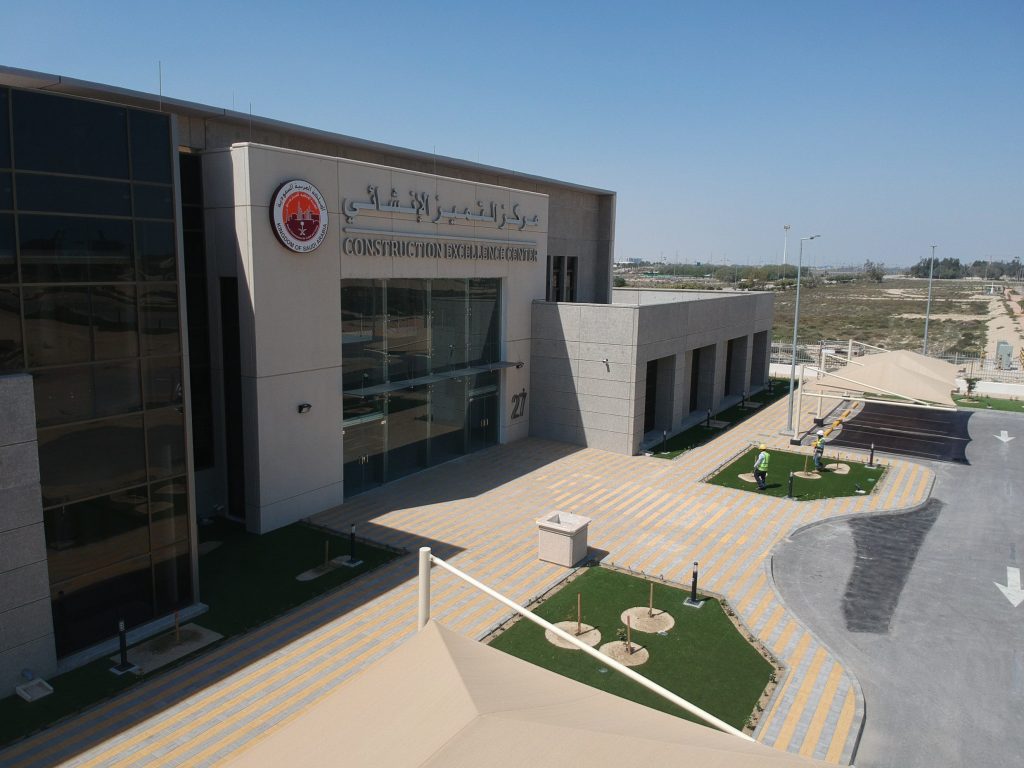
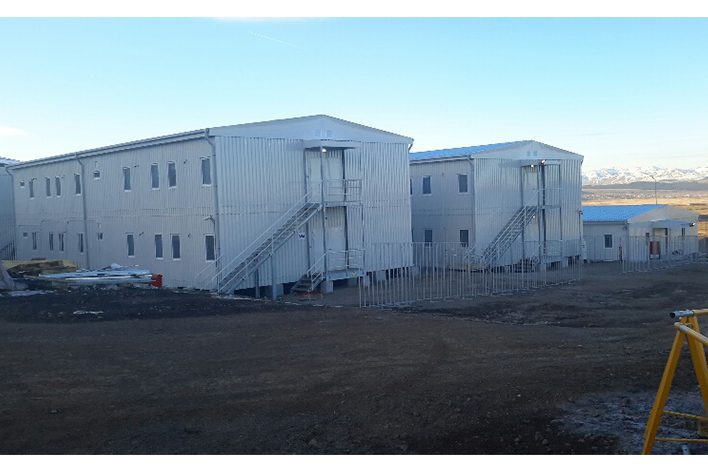
BoldTarget is a general contractor and MEP contractor based in Khobar, offering solar PV EPC alongside HVAC, electrical, plumbing and fire protection services. That combination allows us to design temporary facilities where buildings, cooling, power and water systems work together efficiently. You can see how we approach integrated delivery on our temporary construction facility project in Saudi Arabia.
Talk to BoldTarget about solar powered site facilities
Whether you need a few solar lighting units or a hybrid-powered site office complex, BoldTarget can help you reduce fuel use and meet your sustainability goals without compromising reliability. Explore our TCF services or get in touch with our team to discuss your project in Khobar, Dammam, Jubail, Riyadh or anywhere in the Kingdom.
Frequently Asked Questions
Can a construction site office run entirely on solar power?
Small loads such as lighting, CCTV or gatehouses can run fully on solar with batteries. Larger offices and camps with heavy air conditioning loads are usually best served by a hybrid solar-diesel system.
What is a hybrid solar-diesel system?
It combines solar panels, battery storage and a generator under an automatic controller. Solar supplies daytime power, batteries cover peaks and evenings, and the generator runs only when needed.
How does dust affect solar panels on Saudi construction sites?
Dust reduces panel output, so systems should be laid out for easy access and supported by a regular cleaning plan suited to site conditions.
Can solar equipment be reused after the project ends?
Yes. Modular, pre-wired solar and battery units can be dismantled during demobilization and redeployed on future sites.
Related TCF Guides
- Turnkey TCF Design and Build in Saudi Arabia: Single-Point Delivery
- Temporary Construction Facility Services Saudi Arabia: Full Guide
- How to Choose a TCF Contractor in Saudi Arabia: Criteria & Red Flags
- Temporary Site Offices in Saudi Arabia: Types, Layout and MEP
- Explore our Temporary Construction Facilities (TCF) services