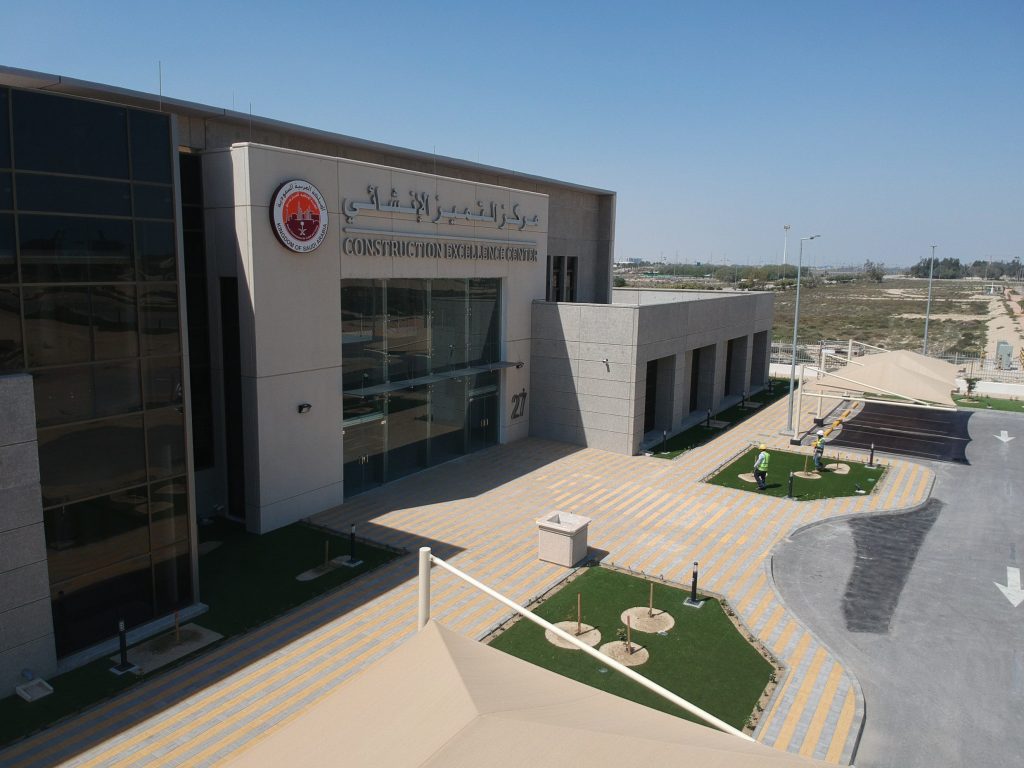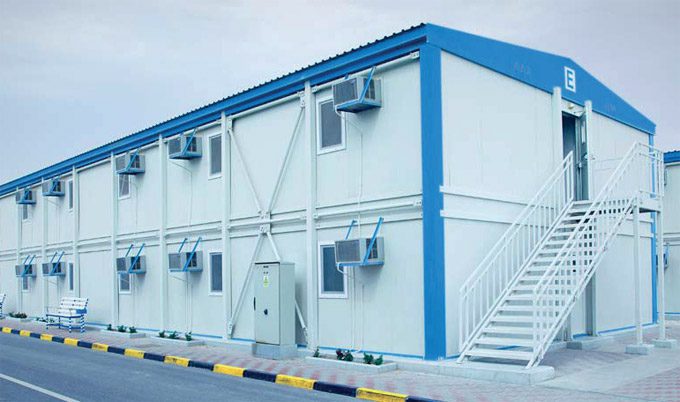
The site office is the command centre of every construction project. It is where the client, consultant and contractor meet, where drawings are reviewed, where progress is reported and where decisions are made every single day. Temporary site offices in Saudi Arabia have to do all of this while staying cool through long summers, keeping out dust, staying connected to project systems and meeting fire and safety expectations, often on a remote site with no permanent utilities. This article explains the main office building types, how to plan the layout, what a good fit-out includes and which MEP systems make the difference between an office people tolerate and one they can work in productively.
What a Site Office Compound Usually Includes
Even on a modest project, the site office is rarely a single cabin. A typical compound includes:
- Project management offices for the client, consultant and contractor teams
- Open-plan engineering and quantity surveying areas
- Meeting and conference rooms, including a larger room for progress meetings
- Document control and plan rooms
- An IT or server room for networks and project systems
- Pantry and break areas
- Toilets and ablution facilities
- A prayer room
- A first aid room
- Reception, visitor induction area and security post
- Parking, shaded areas and covered walkways
On larger projects, the office compound sits within a wider temporary construction facility that also includes accommodation, stores and workshops. Our temporary construction facility services cover the full package so the office area connects cleanly with everything around it.
Types of Temporary Site Office Buildings
There are three common approaches, and many projects combine them as the site grows.
| Building type | Best suited to | Key considerations |
|---|---|---|
| Porta cabins | Early mobilization, small projects, short durations | Fast to deliver and relocate; limited space and variable insulation quality |
| Modular office buildings | Medium and large projects needing flexible layouts | Units join to form larger rooms and can be stacked; better finishes and acoustics |
| Pre-engineered or semi-permanent structures | Long-duration projects and large teams | Large clear spans and a more permanent feel; needs more design and foundation work |
The right choice depends on project duration, team size, budget and whether the buildings will be reused elsewhere. We compare these options in more depth in our article on modular prefabricated site buildings.
Planning the Office Layout
Location and layout decisions made in the first weeks will shape daily life on site for the whole project. Good practice includes:
- Close to the site entrance, away from heavy traffic. Visitors should reach the office without crossing active work zones or haul roads.
- Upwind of dust sources. Keep offices away from batching plants, stockpiles and unpaved haul routes wherever the site allows.
- Clear zoning. Separate client and consultant areas from contractor areas while keeping shared meeting rooms easy to reach.
- Shade and covered walkways. In Saudi summer conditions, shaded parking and covered links between buildings are practical necessities, not luxuries.
- Room to grow. Leave space and utility capacity for extra units as the team expands.
- Safe egress. Plan emergency exits, spacing between buildings and an assembly point from the start.
For a wider view of how offices fit with laydown, accommodation and traffic routes, see our guide to construction site layout planning.
Fit-Out and Finishes
The fit-out determines how comfortable and durable the office will be over months or years of use:
- Insulated wall and roof panels to reduce heat gain and cooling demand
- Durable, easy-to-clean flooring that copes with site dust and boots
- Suspended ceilings where useful to conceal cabling and services
- Windows with solar control or blinds to balance daylight and glare
- Workstations, storage, plan tables and lockable cabinets
- Acoustic treatment for meeting rooms
- Clear signage for rooms, exits and safety equipment
MEP Requirements for Site Offices
This is where many temporary offices succeed or fail. The building shell may look fine, but undersized cooling or overloaded sockets will quickly undermine it.
HVAC and cooling
Cooling must be sized for occupants, computers, printers and the intense solar load on lightweight buildings. Split or packaged units with good dust filtration and adequate fresh air are typical. Our HVAC services team designs for real Saudi conditions, and our article on HVAC for temporary site facilities covers unit selection in detail.
Electrical power and lighting
Offices need dedicated distribution boards, enough socket outlets to avoid extension leads, LED lighting, emergency lighting, proper earthing and protection, and UPS backup for servers and critical equipment. Our electrical services cover the full temporary distribution system, whether fed from generators or a grid connection.
Plumbing and sanitation
Pantries, toilets and ablution areas require reliable water storage and supply, water heaters where needed, and drainage connected to a septic tank, holding tank or sewer. These are delivered through our plumbing services.
Fire safety
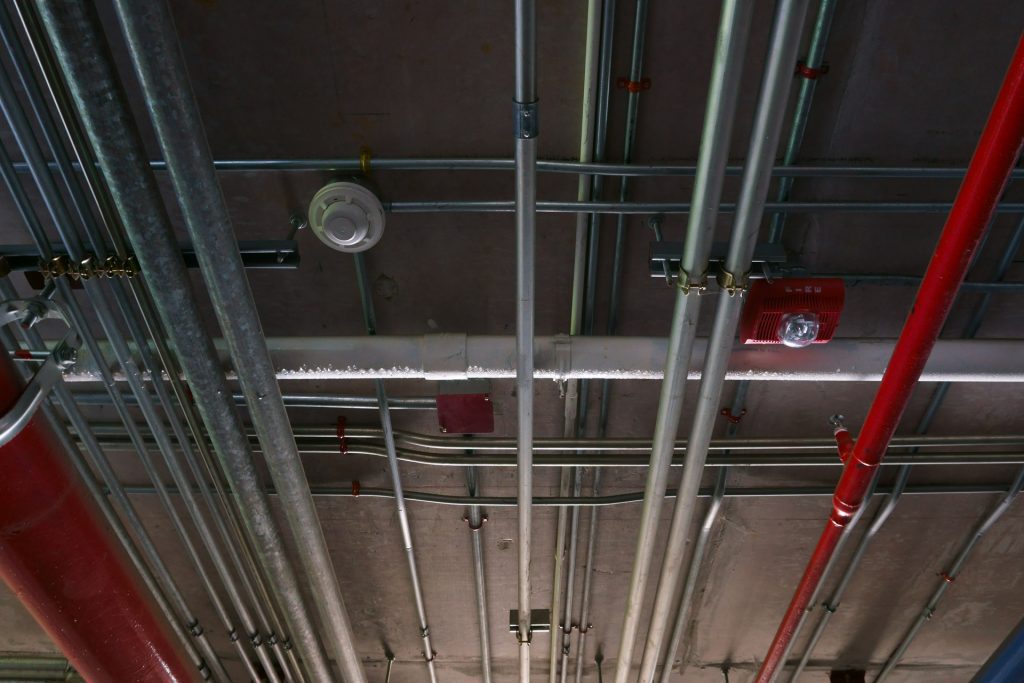
Fire alarm detection, portable extinguishers, emergency lighting, exit signage and safe spacing between buildings should be designed to Saudi Civil Defense expectations and the client's HSE requirements. Our fire fighting and safety team handles design, supply and installation.
Low current and IT
A modern site office runs on data: structured cabling, Wi-Fi, telephones, CCTV, access control and audio-visual equipment for meetings. These are provided through our low current systems services, with the server room cooled and powered separately.
Common Mistakes to Avoid
- Sizing air conditioning for a typical office instead of a lightweight building in Saudi heat
- Too few power points, leading to unsafe daisy-chained extension leads
- No spare space or utility capacity for growth
- Placing offices downwind of dusty operations
- Forgetting dedicated cooling and power backup for the server room
- Poor drainage around buildings, causing damage after heavy rain
How BoldTarget Delivers Temporary Site Offices
BoldTarget is a general and MEP contractor based in Khobar. We plan, install and commission site office compounds as part of complete temporary facilities, delivering the buildings and all MEP systems with one coordinated team. You can see this approach in our Temporary Construction Facility project in Saudi Arabia.
Get a Site Office That Works from Day One
Tell us about your project location, team size and expected duration, and we will help you define the right office buildings, layout and MEP scope. Contact BoldTarget to plan your temporary site offices.
Frequently Asked Questions
What types of temporary site offices are used in Saudi Arabia?
The most common are porta cabins for early mobilization and small projects, modular office buildings that can be joined and stacked for larger teams, and pre-engineered or semi-permanent structures for long-duration projects. Many sites combine more than one type.
How should air conditioning be sized for a temporary site office?
It should account for the number of occupants, computers and equipment, and the high solar load on lightweight buildings in Saudi heat. Good insulation, dust filtration and fresh air are just as important as unit capacity, and server rooms need dedicated cooling.
Where should site offices be located on a construction site?
Ideally close to the main entrance, away from heavy traffic and haul roads, and upwind of dust sources such as batching plants and stockpiles, with space for expansion and a clear emergency assembly point.
Can BoldTarget provide both the office buildings and the MEP systems?
Yes. BoldTarget delivers site offices as part of its temporary construction facility services, covering the buildings together with HVAC, electrical, plumbing, fire safety and low current systems.
Related TCF Guides
- Worker Accommodation Construction in Saudi Arabia: Labor Camp Guide
- TCF for Giga Projects in Saudi Arabia: Planning at Vision 2030 Scale
- MEP for Temporary Construction Facilities: An Integrated Guide
- Temporary Power for Construction Sites in Saudi Arabia: A Guide
- Explore our Temporary Construction Facilities (TCF) services