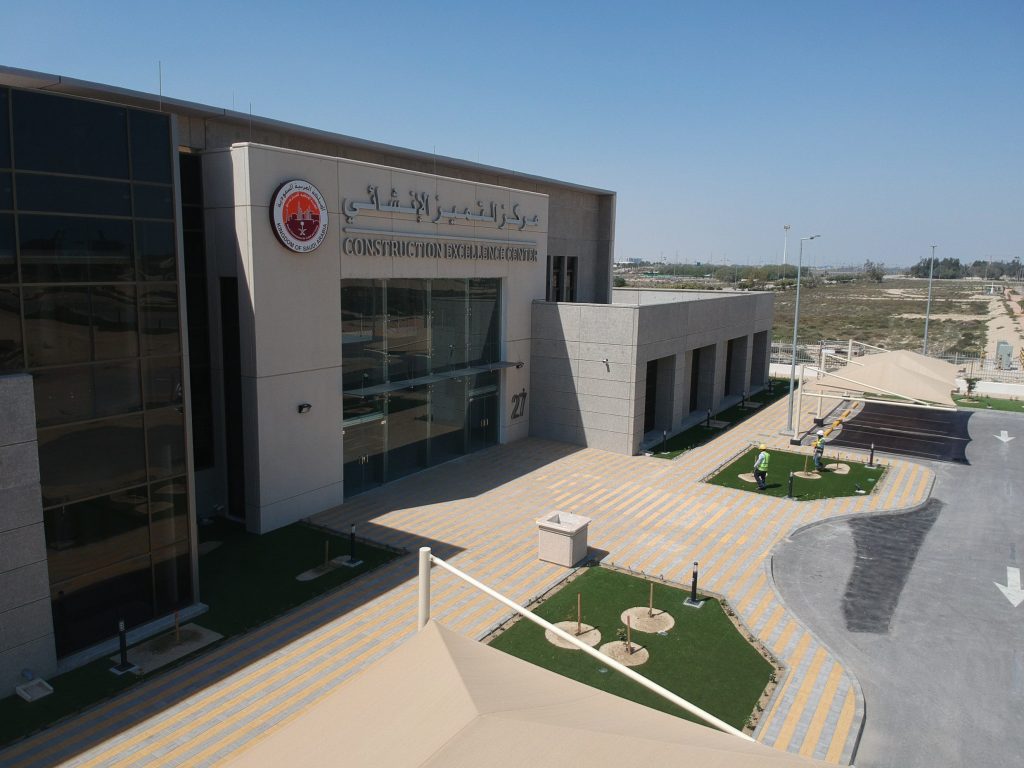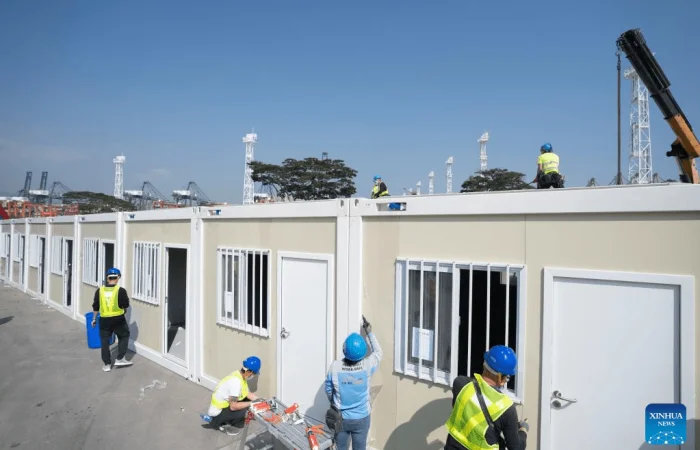
Saudi Arabia is building at a pace few countries have attempted. Under Vision 2030, giga-projects such as NEOM, the Red Sea destination, ROSHN communities and Qiddiya are reshaping entire regions, and every one of them relies on something that rarely makes the headlines: the temporary construction facility. Delivering TCF for giga projects in Saudi Arabia is a discipline of its own. The camps, offices, workshops, stores and utilities that support a large workforce on a remote site must be designed, built and operated with the same rigor as the permanent works, and they usually have to be ready before the first permanent foundation is poured. This article explains what changes at giga-project scale and how an experienced contractor approaches the task.
Why Giga-Project TCF Is Different
On a typical building project, temporary facilities might amount to a few site cabins, a generator and a water tank. On a giga-project, the TCF can resemble a small town with its own roads, power plant, water network and community services. The main differences are:
- Scale: accommodation, dining, recreation, clinics and offices for workforces that grow and shrink with each construction phase.
- Remoteness: sites far from established utility networks, ports and supplier depots.
- Duration: facilities that may stay in service for several years and must survive repeated summers of extreme heat, dust and wind.
- Many stakeholders: developers, program managers, main contractors and subcontractors who all need offices, laydown and services.
- High expectations: clients and authorities expect strong performance on worker welfare, fire safety and the environment.
For these reasons, giga-project TCF should be treated as an infrastructure program in its own right rather than a line item in the preliminaries. Working with a dedicated temporary construction facility contractor gives the project a team that plans, engineers and delivers these facilities as a core scope.
Planning for Remote and Undeveloped Sites
Remote locations change almost every planning assumption. Before a single cabin is placed, the team has to decide how people, materials and utilities will reach the site and how the facility will run on its own.
Utilities built from zero
Where there is no grid connection, power comes from generator plants, increasingly supported by solar PV and battery storage. Potable water may be trucked in or produced on site, then stored and distributed through a temporary network. Wastewater needs septic systems or packaged sewage treatment plants sized for the peak population, with a clear plan for effluent and sludge disposal.
Access and logistics
Access roads, staging yards and delivery schedules must be planned alongside the camp layout. Long-lead items such as generators, transformers, packaged plants and large HVAC units should be ordered early and stored away from sun and sand until installation.
Climate and terrain
Site selection and grading should account for wind direction, drifting sand, drainage paths and the risk of flash flooding in low-lying areas. Buildings need good insulation, sealed envelopes and cooling capacity that matches real summer conditions.
Phased Delivery in Step with the Project
A giga-project rarely needs its full TCF on day one. The most efficient approach is to build in phases that mirror the construction program:
- Pioneer camp: a compact, fast-to-install facility for surveyors, early earthworks crews and the TCF team itself.
- Ramp-up: accommodation blocks, dining halls, offices, workshops and utility plants installed in modules as manpower increases.
- Peak operation: full capacity, with the focus on maintenance, cleaning, catering support and continuous HSE monitoring.
- Ramp-down and demobilization: modules removed or relocated as work packages finish, followed by site restoration.
Designing for modularity from the start makes each phase faster and reduces waste. Layouts should reserve space for expansion blocks and utility upgrades without disrupting occupied areas. Our guide to TCF mobilization and demobilization planning covers sequencing in more detail.
Choosing the Right Building Systems
Giga-project TCF usually combines several building systems, each suited to a particular function:
- Portable cabins for quick-start offices, guard rooms and small amenities.
- Modular prefabricated units that can be stacked and linked into accommodation blocks and office complexes.
- Pre-engineered steel buildings for clear-span spaces such as dining halls, workshops, stores and recreation halls, an area where BoldTarget's experience in industrial and pre-engineered buildings applies directly.
Whatever the system, materials should be SASO-compliant, structures should follow the Saudi Building Code, and envelopes should be well insulated to cut cooling loads. Durable finishes and protective coatings pay for themselves on facilities that stay in use for years, especially near the coast.
Worker Welfare and Compliance at Scale
With large workforces living on site, welfare is both a legal obligation and a productivity driver. Accommodation must meet Saudi labor-accommodation standards for space, ventilation, sanitation and amenities. Fire safety must satisfy Saudi Civil Defense expectations, including detection and alarm systems, firefighting equipment, emergency lighting, safe separation between blocks and clear escape routes. Clinics, prayer areas, laundries and recreation spaces all support a healthy, stable workforce.
Safety should be built into the facility from the design stage, in line with the contractor's HSE policy. For a closer look at camp design, read our article on worker accommodation and labor camps in Saudi Arabia.
Integrated MEP and Sustainability
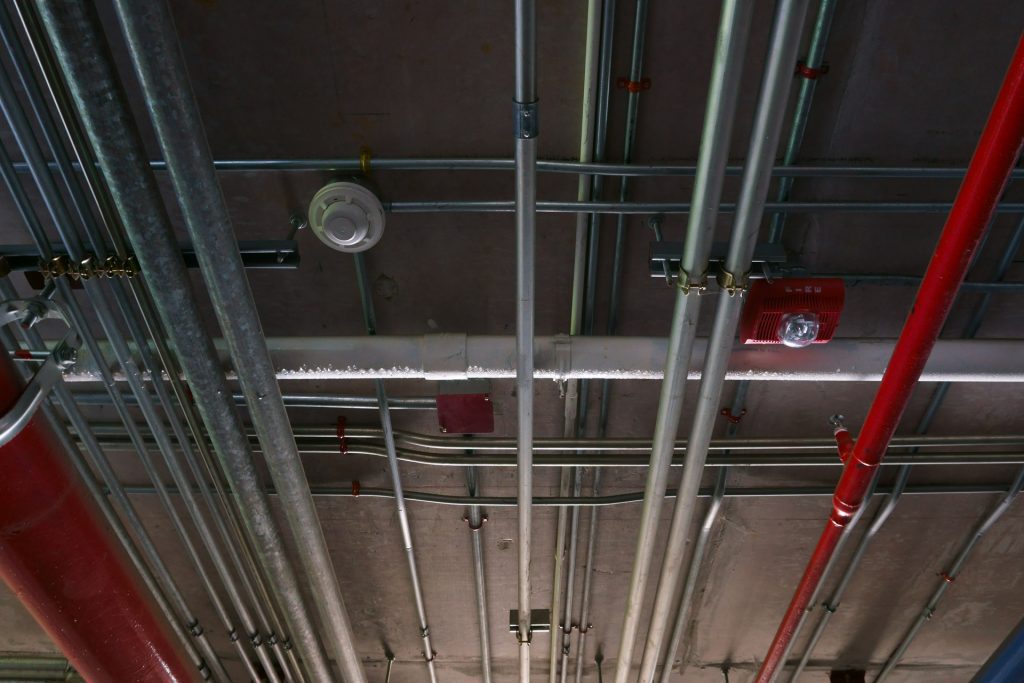
At this scale, mechanical, electrical and plumbing systems are the backbone of the TCF. Power plants, distribution networks, HVAC, water supply, drainage, fire fighting and low-current systems such as CCTV, access control and site networks must be coordinated as one design. An integrated MEP contractor avoids clashes, simplifies maintenance and makes expansion easier.
Sustainability is also central to Vision 2030. Hybrid systems that pair generators with solar PV EPC solutions, efficient cooling, LED lighting, water-saving fixtures and reuse of treated water for dust suppression can reduce fuel use, emissions and operating costs over the life of the camp.
How BoldTarget Supports Large-Scale TCF
BoldTarget is a Khobar-based general contractor and MEP contractor with in-house capability across civil works, steel buildings and building services. That combination suits temporary facilities, where structures and services must come together quickly and reliably. Our approach includes:
- Early involvement through pre-construction services to define capacities, phasing and utility strategy.
- Single-team delivery of civil, structural and MEP scopes under our general contracting services.
- Modular, expandable designs that follow the project's manpower curve.
- A practical focus on HSE, maintainability and complete handover documentation.
See how we work in practice in our temporary construction facility project in Saudi Arabia, and learn about our single-point model in turnkey TCF design and build.
Plan Your Giga-Project TCF with BoldTarget
The temporary facility sets the tone for the whole project. A well-planned TCF keeps workers safe and productive, keeps schedules on track and gives the client confidence from the first day on site. If you are preparing a large or remote project in the Kingdom, BoldTarget can help you plan capacities, phasing and utilities, then deliver the facility as one integrated package. Contact our team to discuss your requirements and explore our TCF services in Saudi Arabia.
Frequently Asked Questions
What does a TCF include on a giga project?
A giga-project TCF typically includes worker accommodation, dining halls, offices, clinics, prayer and recreation areas, workshops, stores and laydown yards, plus the utilities that serve them: power generation and distribution, HVAC, water supply, sewage treatment, fire fighting and low-current systems such as CCTV and access control.
How early should TCF planning start on a giga project?
As early as possible, ideally during pre-construction. Capacities, phasing, utility strategy and long-lead equipment all need to be defined before mobilization so the pioneer camp is ready when the first crews arrive and later phases can expand without disruption.
Can temporary facilities be relocated or reused?
Yes. Modular units, portable cabins and many pre-engineered steel structures can be dismantled and relocated to other work fronts or future projects, which reduces waste and can improve the overall value of the TCF investment.
Does BoldTarget deliver TCF for remote sites?
BoldTarget is based in Khobar and supports projects across Saudi Arabia. We plan and deliver temporary facilities including structures and full MEP services. Contact our team to discuss your site location, capacities and schedule.
Related TCF Guides
- MEP for Temporary Construction Facilities: An Integrated Guide
- Temporary Power for Construction Sites in Saudi Arabia: A Guide
- HVAC for Temporary Site Facilities: Cooling in Saudi Conditions
- Water and Sewage for Construction Camps in Saudi Arabia
- Explore our Temporary Construction Facilities (TCF) services